- Galeria Local Newsletter
- Posts
- Issue 33: The Photographic Object
Issue 33: The Photographic Object
On stillness, reproducibility, and identity across surfaces

Jorge Silva
March 03, 2026
GALERIA LOCAL
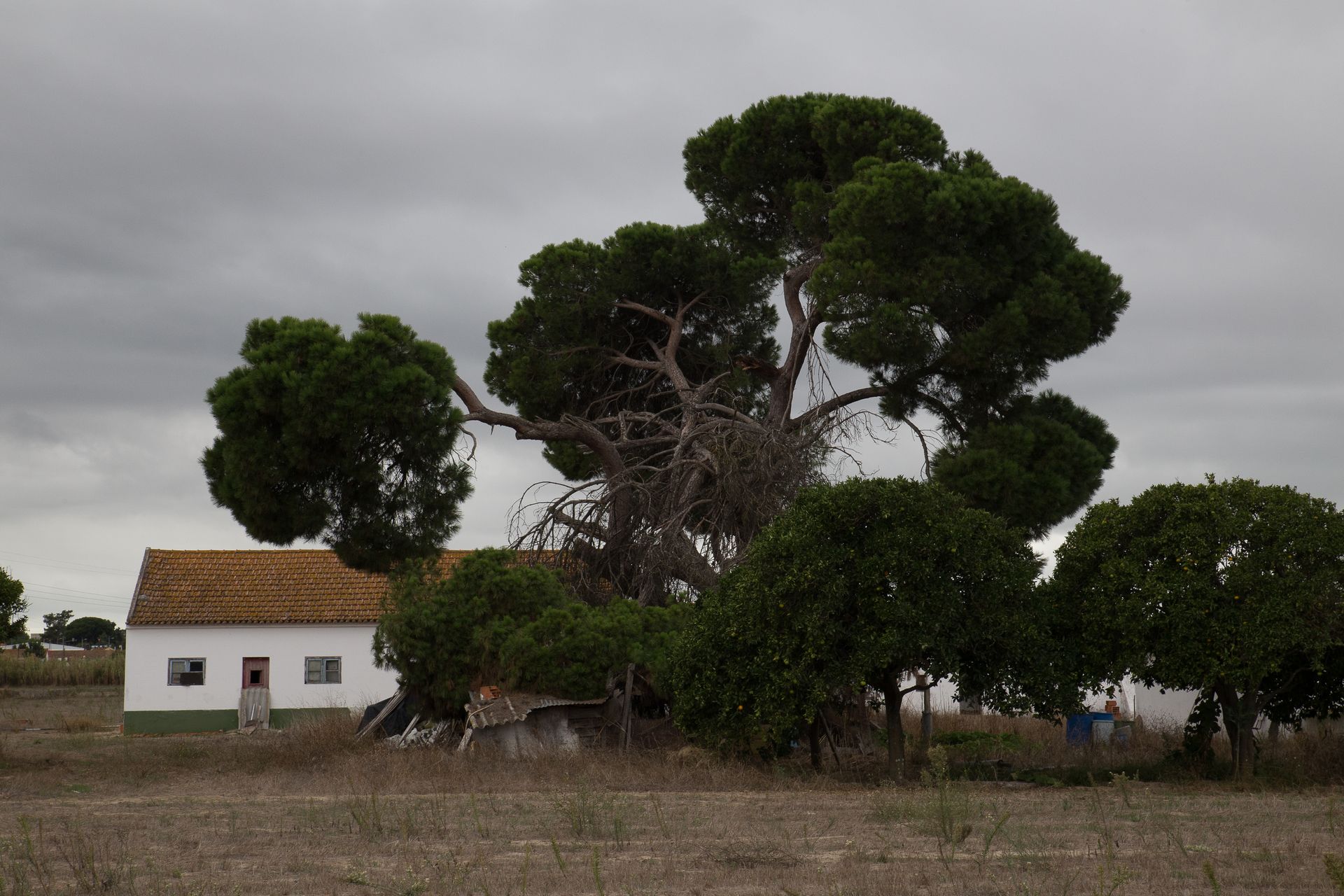
by Jorge Silva
Welcome — and thank you for reading.
Across the previous two issues, I began consolidating the ideas that have shaped this newsletter over the first thirty editions — perception as a structured event, authorship as a gradient between internal necessity and external systems, and photography as an object that travels across infrastructures without losing its relational core. This third part turns more directly to the photographic object itself. If an image can move across supports, persist through replication, and operate within shifting contexts, where does its value reside? What gives it force when scarcity is no longer its primary guarantee? And how does context — internal and external — participate in its meaning? | Alongside these reflections, I continue sharing fragments from Estrada Real, a project currently entering its editing phase for a book. The work has been quietly unfolding across recent issues; here, it stands as a concrete thread within these broader questions about object, circulation, and presence. The essay and Narrative Layers together complete this three-part consolidation — a point of orientation before the next movement begins. —Jorge |
The Ontology of the Digital Photograph
After reflecting on perception and authorship, another question emerges almost inevitably: what kind of object is a photograph today?
Photography has always contained a paradox. It fixes a moment, yet it is built on reproducibility. From its earliest history, a photograph could be printed again, placed in different albums, stored in archives, shown elsewhere. Unlike painting, it was never tied to a single material body. Its identity did not depend on uniqueness, but on recognizability.
Digital technology does not invent this condition; it intensifies it. A photograph is no longer anchored to a primary surface. It can appear on paper, on a screen, projected onto architecture, embedded in a website, transmitted across devices. What persists is not a specific material support, but a structured configuration of light and relation — something that remains identifiable across contexts.
This raises a genuine ontological question. A digital photograph is not purely material, yet it is not reducible to an idea. It occupies an intermediate state: stable enough to be recognized, flexible enough to migrate. It survives not through permanence in one place, but through coherence across appearances.
Circulation, in this sense, is not an external force acting upon photography. It belongs to its nature. What has changed is the scale and speed of that movement. Images now travel continuously, often without pause. Context shifts rapidly. Supports change. Attention fluctuates.
And yet, the photograph does not dissolve simply because it moves.
Stillness remains central. A photograph arrests time, yet it often carries the sensation of imminence — a gesture unfinished, a word not yet spoken, a moment suspended just before it unfolds.
This internal tension is inseparable from context. Every photograph contains an inner context — its compositional relations, its light, its framing, the alignment between what is seen and how it is seen. But it also enters external contexts — spatial, temporal, architectural, social. The axis between these two dimensions has always structured photographic experience. What changes today is the fluidity with which the outer context shifts.
Scale alters experience. Placement alters emphasis. Duration alters perception. A photograph shown in a gallery, printed in a book, projected in public space, or viewed on a personal device activates different modes of encounter. Context does not simply surround the image; it participates in its meaning.
The ontology of the photographic object lies in this double condition. It is neither bound to a single surface nor dissolved into abstraction. It persists as a structured configuration whose internal relations remain legible even as its external conditions change.
Photography has always been an art of repetition and return. From print to print, from wall to wall, from surface to surface, the image reappears without ceasing to be itself. What changes is not its nature, but the environments through which it moves.
To understand photography today is therefore to understand this dynamic interplay: a stable inner structure meeting shifting outer contexts. The image does not depend on one material destiny. It depends on the clarity of its internal relations and on the precision with which it enters the spaces where it appears.
Narrative Layers
The Photographic Object — Value, Display, Persistence
If the digital photograph is structurally independent from any single support, the question shifts: where does value accumulate?
Reproducibility is not new to photography, but digital circulation intensifies it. The object can travel instantly, appear everywhere, and multiply without friction. What becomes decisive is not uniqueness in a material sense, but the conditions under which an image stabilizes — how it is displayed, authenticated, contextualized, and sustained.
The following artists operate precisely at that threshold.
Wolfgang Tillmans
Over the past decade, Wolfgang Tillmans has treated paper prints, inkjet works, and digital screens as interchangeable surfaces within the same exhibition logic. Photographs appear unframed, taped, printed at different scales, or displayed on monitors — none claiming ontological superiority.
What matters is configuration: sequence, adjacency, proportion, rhythm. Support becomes variable; structure remains deliberate.
Refik AnadolRefik Anadol works with large datasets to generate immersive visual environments projected onto architectural surfaces and screens. The “image” is no longer a fixed object but a continuously computed field of light. These works raise a structural question: when photography becomes data-driven and computationally rendered, where does the object reside — in the file, the algorithm, the projection, or the institutional commission? | Transfer GalleryTransfer Gallery has experimented with exhibiting and selling digital-native works — including screen-based pieces and blockchain-authenticated files. Rather than resisting reproducibility, these platforms attempt to construct new frameworks for ownership and legitimacy within infinite circulation. Here, the photographic object is stabilized not by material singularity, but by contractual and infrastructural conditions. |
Erik Kessels
Erik Kessels works with found photography and large-scale image accumulation. Rather than producing new photographs, he collects images already circulating online and recontextualizes them to expose patterns of repetition, excess, and collective behavior.
In 24Hrs in Photos, he printed every image uploaded to Flickr in a single day, transforming digital overflow into a physical installation. The focus shifts from the individual photograph to the scale of production itself. What becomes visible is not authorship in the traditional sense, but the structure of contemporary image culture.
Website:
→ www.erikkessels.com
Coming Next:
Estrada Real
Over the last several issues, I’ve been sharing photographs from a long-term project currently titled Estrada Real.
The work began between 2020 and 2022 as a territorial study of the Setúbal Peninsula — tracing a route along the estuarine edge of the Tagus before crossing inland through rural and suburban landscapes. What started as a geographical movement gradually became an inquiry into margins, infrastructures, informal architectures, and the quiet negotiations between land, labor, and habitation.
At this stage, the project is being edited into book form, with a first prototype already underway. An exhibition is expected to follow in the coming months.
More details will follow soon.
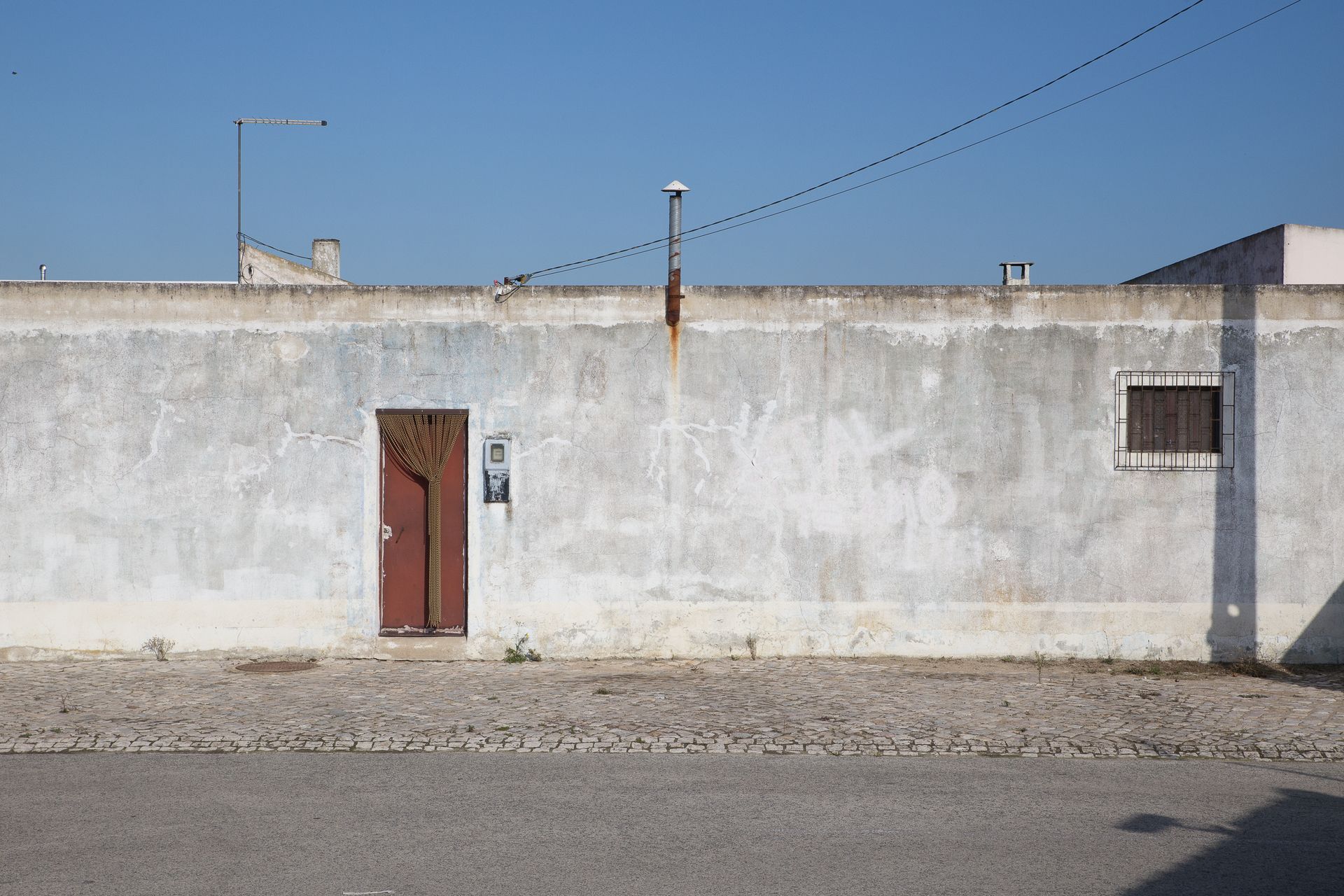 by Jorge Silva |
“The ordinary is a very under-exploited aspect of our lives because it is so familiar.”
Martin Parr
Until next time,