- Galeria Local Newsletter
- Posts
- Issue 30: When the Work Takes Over
Issue 30: When the Work Takes Over
Artistic necessity versus systemic production

Jorge Silva
December 30, 2025
GALERIA LOCAL
by Jorge Silva
Welcome — and thank you for reading.
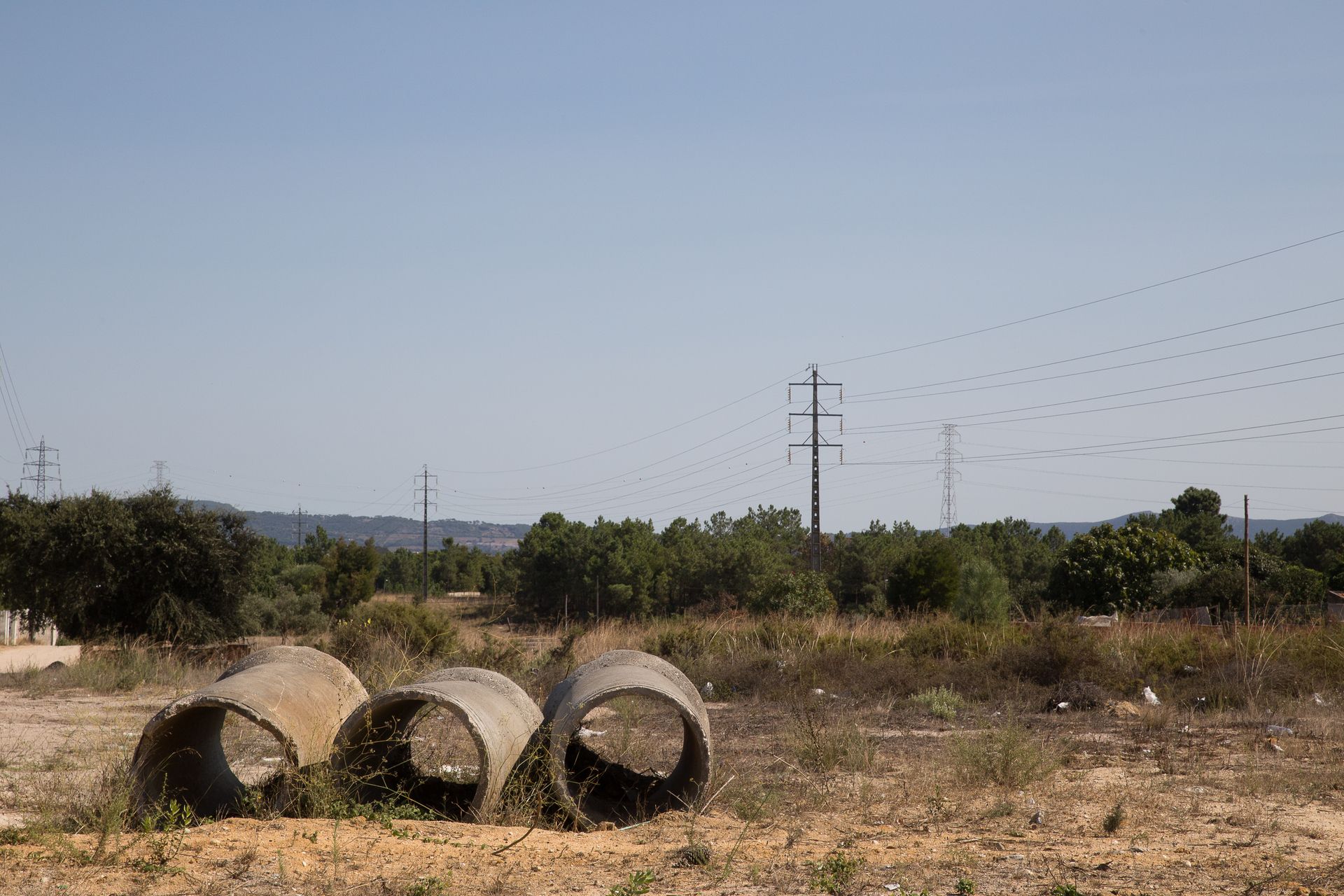
This issue features the third and final essay in the current series on Leibniz, bringing the cycle to a close by focusing on coordination, individuality, and the conditions that allow freedom to exist without direct control. Rather than treating freedom as independence or spontaneity, the essay explores how action becomes possible within structures that do not dictate outcomes but make them legible. Alongside this essay, Narrative Layers continues to develop as a space for thinking through contemporary photographic practice in concrete terms. The focus here is on how images operate today: how they are produced, structured, circulated, and encountered within real environments. Rather than treating photography as an isolated object or a purely symbolic act, this section follows the conditions that shape how images appear, persist, and gain meaning in the world. | Across these texts, a common question emerges: how much structure is necessary for meaning to appear, and when does structure begin to replace agency? This issue does not aim to resolve that tension, but to clarify it — as a way of thinking more precisely about creation, circulation, and responsibility in contemporary photography. |
Freedom Without Contact
On coordination, individuality, and shared order
If the first movement of Leibniz’s thought invites us to loosen the grip of necessity, and the second multiplies the world into a field of perspectives, the third brings us to a quieter but more demanding question: how can plurality hold together without collapsing into chaos or authority?
Leibniz’s answer is neither political in the modern sense nor mystical in the naïve one. It is architectural. The world, he proposes, is not unified by force, command, or direct causality, but by compatibility. Things coexist not because they are identical, nor because they obey a single external rule, but because their differences can resonate without destroying one another. Harmony, in this sense, is not agreement. It is a condition in which divergence remains intelligible.
This is where the idea of pre-established harmony enters, often misunderstood as a theological shortcut. Read carefully, it is something else entirely. It is a way of thinking order without control, coordination without communication, coherence without reduction. Each individual substance follows its own internal logic, its own rhythm of change, its own partial view of the whole. And yet, these trajectories do not collide arbitrarily. They align, not by negotiation, but by design.
What matters here is not whether one accepts the metaphysical framework literally. What matters is the structural insight it offers: a system can be coherent without being centralized, and freedom does not require isolation. It requires compatibility.
This distinction becomes clearer when we contrast Leibniz once again with Spinoza. Where Spinoza finds freedom in understanding necessity, Leibniz locates it in inhabiting possibility. Not the abstract possibility of anything whatsoever, but a constrained, structured field in which multiple paths can be taken without breaking the world. Freedom, here, is not the absence of structure. It is movement within structure — initiative exercised under conditions that do not dictate outcomes.
Importantly, this also reframes the problem of individuality. In Leibniz, individuality is not a defect caused by limited knowledge, nor a deviation from a universal truth. It is a feature of reality itself. Each perspective is finite, incomplete, and irreducible. Absolute clarity would dissolve difference; total transparency would erase the very standpoint from which experience occurs. In this sense, limitation is not the enemy of freedom. It is its precondition.
Seen this way, harmony is not a final state but an ongoing condition — a fragile balance between divergence and coherence. It does not eliminate error, conflict, or asymmetry. It allows them, while preventing collapse. The world remains intelligible not because it is simple, but because its complexity is structured.
This has a subtle ethical implication. If no single perspective exhausts the whole, then authority grounded in total vision becomes suspect. Likewise, pluralism without structure becomes noise. Leibniz refuses both extremes. He does not offer synthesis in the sense of resolution, but co-presence — a world where many viewpoints coexist without needing to be unified into one voice.
What closes the cycle, then, is not an answer but a stance. A way of thinking freedom that avoids both determinism and arbitrariness. A way of imagining order that does not require domination. A way of holding plurality without dissolving meaning.
Leibniz does not tell us what to choose. He tells us what kind of world makes choosing meaningful.
And that, perhaps, is his most enduring contribution.
Narrative Layers
These reflections take a step back from images themselves and focus instead on the conditions under which images are made, shaped, and released into the world. What interests me here is a subtle but decisive distinction: the difference between situations where a work gradually asserts its own internal logic, and situations where images are fully absorbed by pre-existing systems that leave no space for dialogue. The five blocks that follow explore this tension — not as a moral judgement, but as a way to clarify how authorship, attention, and structure operate today.
LISTENING TO THE WORK
There are moments in artistic practice when decisions no longer feel imposed from the outside. The work begins to demand its own form, its own rhythm, its own limits. Choices are not arbitrary, but neither are they fully planned. The artist does not withdraw; attention sharpens. One listens closely, adjusting in response to what the work seems to require in order to remain coherent.
 by Jorge Silva In other contexts, authorship fades for a very different reason. Political imagery, advertising, and much commercial visual production are driven by systems that predefine outcomes in advance. Formats, colours, messages, and timing are optimized before any image is made. Here, the image does not ask for anything. It executes. What disappears is not the ego of the author, but the possibility of dialogue with the work itself. “There is a crucial difference between stepping back to listen to a work, and stepping back because the system has already decided everything.” Superficially, both situations can look alike: the artist steps back. But the similarity is misleading. In one case, stepping back allows the work to emerge more clearly. In the other, stepping back is required because decisions have already been made elsewhere. One is an act of attention; the other is a function within a system. Confusing these two leads to a dangerous neutrality, where listening and obedience appear indistinguishable. | 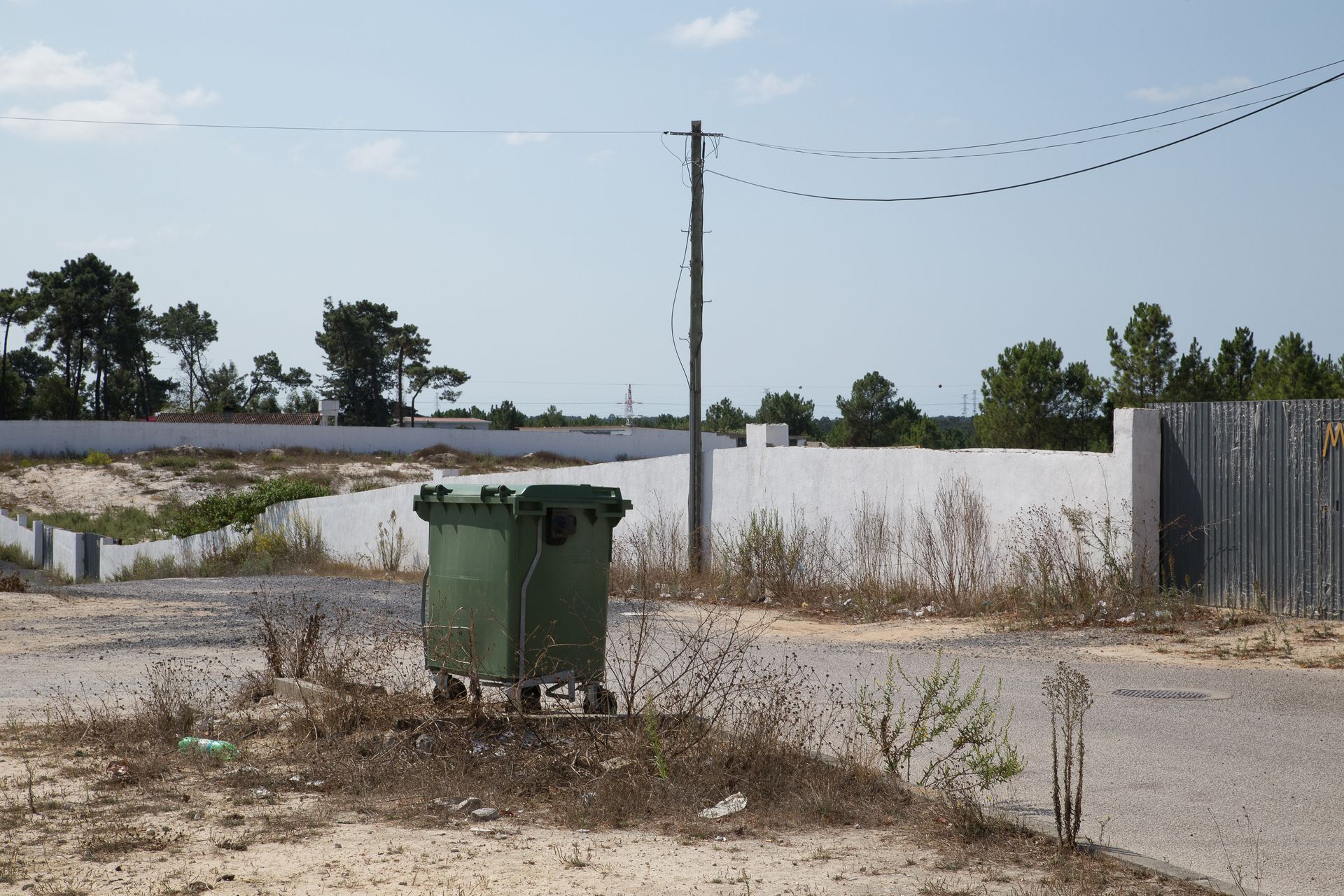 by Jorge Silva “When an artwork leads, the artist follows a necessity that emerges; when a system leads, the image merely executes a plan.” When a work overtakes its maker, it does so through internal necessity — a logic that unfolds from within the material, the subject, and the process itself. When systems overtake the maker, they do so through external optimization — metrics, targets, visibility, efficiency. Both organize images. Only one preserves the possibility of meaning that was not fully known in advance.
 by Jorge Silva |
First Structure, First Context
I’ve begun the initial steps toward building an itinerant structure for photographic exhibitions.
The first context under consideration is luxury boutique hotels in Lisbon, as part of a controlled, small-scale test.
This phase is about structure, feasibility, and learning from real conditions.
Coming Next:
New interview series
A new interview series is in preparation — conversations with voices from the international photography world as well as thinkers and practitioners from related fields. I’ll share more details as soon as the first conversations are ready to unfold.
“The ordinary is a very under-exploited aspect of our lives because it is so familiar.”
Martin Parr
Until next time,