- Galeria Local Newsletter
- Posts
- Issue 29: The Space of Possibility
Issue 29: The Space of Possibility
How freedom emerges from structure, not outside it

Jorge Silva
December 26, 2025
GALERIA LOCAL

by Jorge Silva
Welcome — and thank you for reading.
In this issue, I’m featuring the second essay in a short series of reflections on Leibniz, continuing the thread opened in the previous one. I’m using philosophy here as a way to think more clearly about freedom, structure, and perspective — questions that remain pressing well beyond their historical context, and that still shape how we understand choice, action, and individuality today. Alongside the main essay, Narrative Layers turns its attention toward photography itself. Not as an isolated object, but as something that exists through space, support, timing, and circulation. These reflections focus on conditions — on what allows images to be seen, encountered, and experienced in the present, and on how different contexts shape the way images appear and resonate. | This issue sits between continuity and movement: it deepens an ongoing philosophical inquiry while gradually opening a parallel line of thought about photography’s place in public space, its modes of presence, and its possible future forms of exhibition. —Jorge |
From Necessity to Possibility
How freedom emerges not by escaping structure, but by inhabiting a world of multiple perspectives
After Spinoza, freedom appears inseparable from necessity. To understand the causes that determine us is already to act more freely within them. Knowledge does not remove constraint, but it dissolves confusion. Freedom is not exemption from the laws of nature, but lucidity within them.
Leibniz begins elsewhere.
He does not deny order, nor does he reject rational structure. What he questions is the idea that order must be grounded in necessity. For Leibniz, the world is not the only way it could be. It is one realization among many possible ones. Reality is orderly, but it is not logically compelled to be exactly as it is. The crucial distinction he introduces is between what is necessary and what is possible.
Necessity belongs to logic: to mathematics, to formal relations, to truths that cannot be otherwise without contradiction. Reality, by contrast, is contingent. The fact that the world is coherent does not mean it had to take this exact form. Order does not imply inevitability. This single shift quietly reconfigures the problem of freedom.
If the world is one among many possible configurations, then freedom does not consist in escaping structure, but in navigating a structured field of alternatives. Freedom is no longer opposed to order. It is exercised within it.
Leibniz’s universe is not a closed geometry but a landscape of perspectives. Each being occupies a position from which the whole is perceived partially, never exhaustively. No single viewpoint captures the totality. The world is not unified by a single, transparent law but coordinated through a multiplicity of partial views. What holds it together is not uniformity, but compatibility.
This has a subtle consequence: freedom requires limitation. Absolute clarity would dissolve perspective. If one could see everything at once, from everywhere, individuality would collapse into totality. Finite perspective is not a defect to be overcome, but the very condition that allows choice to exist. To choose is to choose from somewhere.
From this point of view, freedom is not an absence of determination, but a mode of initiative. Each perspective unfolds according to its internal coherence, responding to the world not through direct causation but through its own orientation. Action becomes meaningful not because it escapes structure, but because it expresses a position within it.
Leibniz thus relocates freedom from awareness of necessity to engagement with possibility. Where Spinoza emphasizes understanding, Leibniz emphasizes orientation. Both reject arbitrariness. Choice is never random. But for Leibniz, choice is shaped by values, tendencies, and internal dispositions that do not reduce to a single universal plane.
This also explains why Leibniz is so invested in plurality. A world with fewer perspectives would be poorer, not more ordered. Diversity is not noise to be eliminated but richness to be coordinated. The challenge is not to impose unity, but to design conditions under which different viewpoints can coexist without annihilating one another.
Seen this way, freedom is neither rebellion nor withdrawal. It is participation. Not submission to a fixed order, but movement within a living one. Structure becomes enabling rather than restrictive. Constraint becomes a framework within which something can happen.
What Leibniz offers, then, is not a theory of free will in the moral sense, but a model of freedom as situated action. We are not free because nothing constrains us. We are free because the world allows for multiple, coherent ways of being in it.
Freedom does not lie beyond structure. It emerges when structure is open enough to sustain plurality.
Narrative Layers
A photograph is not the same thing everywhere.
Its meaning shifts depending on where and how it appears — on a wall, on a screen, in public space, online, briefly, repeatedly, or unexpectedly. Circulation is not neutral; it shapes how an image is received. Each context activates a different way of seeing. To think about photography today is to think about these movements, not just about the image itself.
ON CIRCULATION, ATTENTION AND THE PLACES IMAGES LIVE
For a long time, visibility was assumed to be power. To be seen was to exist.
Today, visibility alone no longer guarantees attention. Images can be present everywhere and still pass unnoticed. This does not mean images are weaker — it means the environment has changed. What matters now is not simply appearing in public space, but how that appearance is organised: where it happens, what surrounds it, and whether it invites a moment of looking rather than immediate distraction.
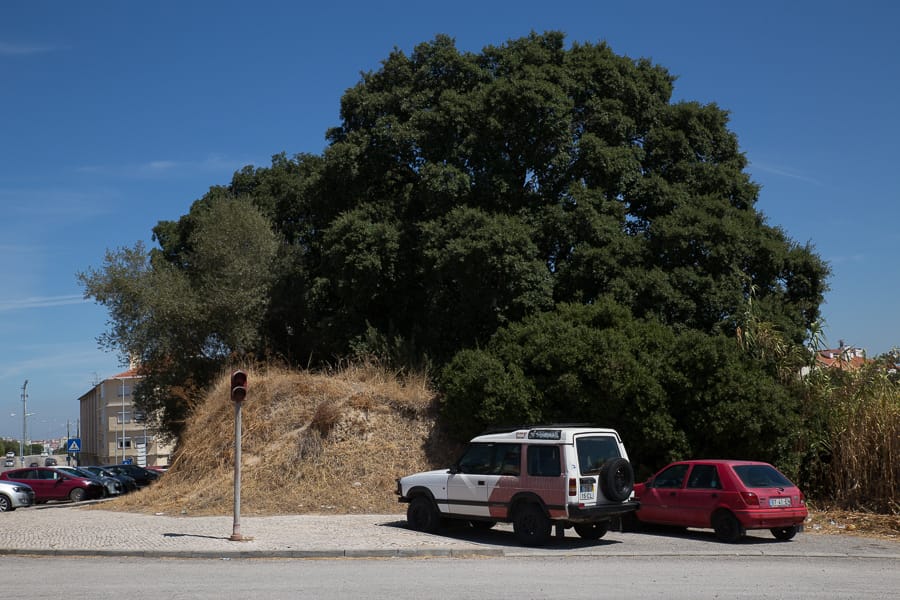 by Jorge Silva Photography has always depended on circulation. Prints moved from hand to hand, books travelled, exhibitions gathered people in specific places. What has changed is not this condition, but its range. Photographs are no longer tied to a single material form. They can appear on paper, walls, screens, façades, or temporary structures. Meaning emerges less from permanence than from how an image is encountered across different supports and situations.. “What matters now is not simply appearing in public space, but how that appearance is organised.” Placing an image in public space does not guarantee that it will be seen. Cities are already dense with signals competing for attention. What allows looking to happen is not sheer presence, but conditions: scale, placement, rhythm, pauses, and distance. Even traditional galleries were designed around this problem — how to create a space where attention can settle. Today, that question returns in new environments, with new variables. | 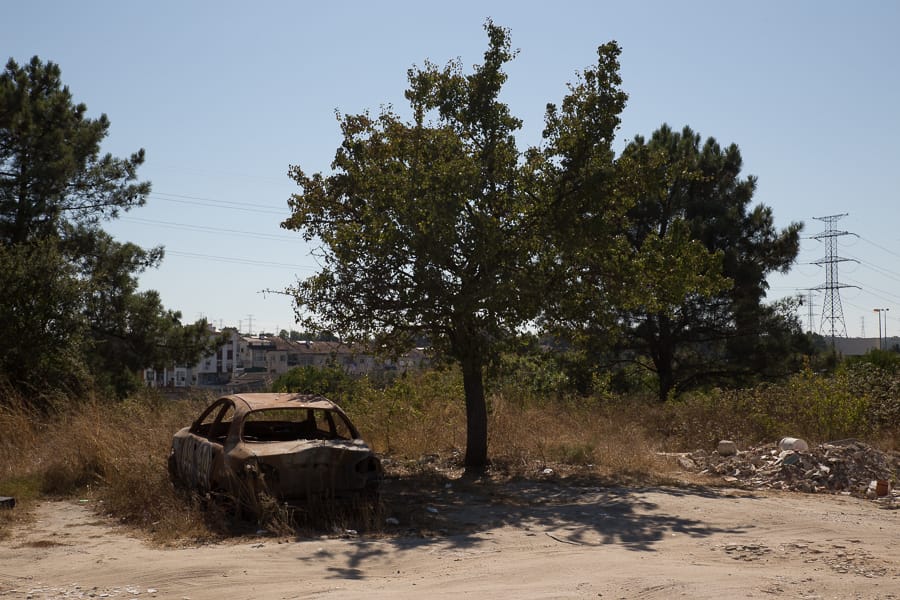 by Jorge Silva “Structure, when well designed, becomes an invitation rather than a constraint.” Every exhibition, book, or sequence already implies a structure. Images are never encountered in isolation. They appear in relation to other images, to spaces, to movement. Structure does not restrict freedom; it makes perception possible. Without some form of organisation — sequences, intervals, spatial logic — images compete with one another and dissolve into noise. Structure, when well designed, becomes an invitation rather than a constraint. In a saturated environment, timing matters. A photograph can gain intensity not by constant availability, but by appearing deliberately, under specific conditions, and for a reason. The question is no longer only what an image shows, but when, where, and for whom it becomes visible. Photography today asks not just for images, but for thoughtful decisions about their moments of appearance. 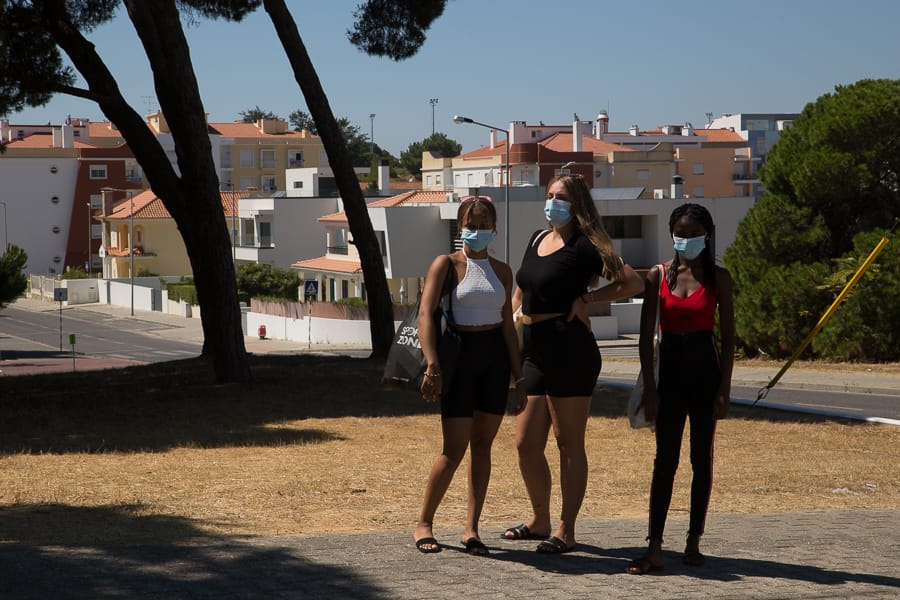 by Jorge Silva |
Coming Next:
New interview series
A new interview series is in preparation — conversations with voices from the international photography world as well as thinkers and practitioners from related fields. I’ll share more details as soon as the first conversations are ready to unfold.
“The ordinary is a very under-exploited aspect of our lives because it is so familiar.”
Martin Parr
Until next time,