- Galeria Local Newsletter
- Posts
- Issue 28: STRUCTURES OF POSSIBILITY
Issue 28: STRUCTURES OF POSSIBILITY
On freedom, structure, and the circulation of images

Jorge Silva
December 19, 2025
GALERIA LOCAL
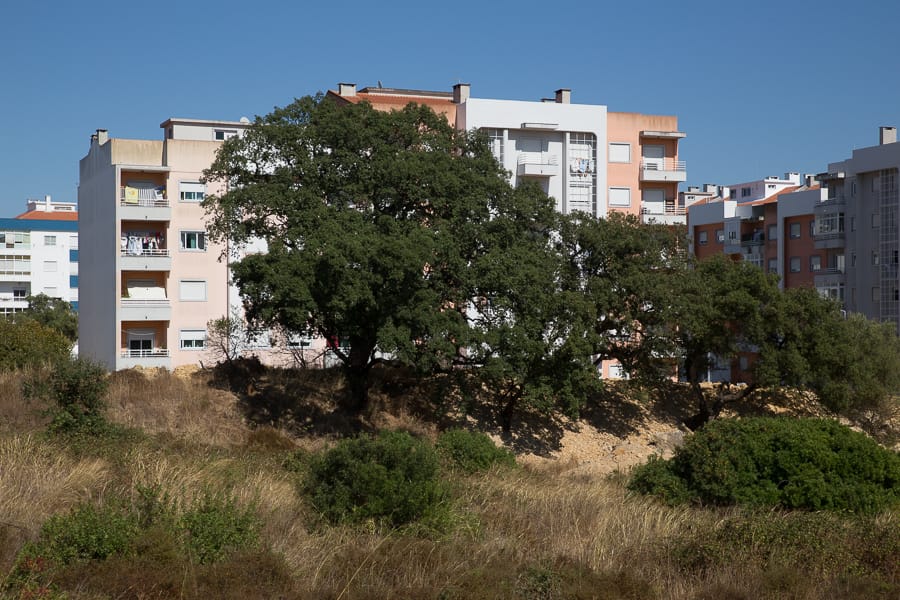
by Jorge Silva
Welcome — and thank you for reading.
This issue opens a new twelve-part editorial cycle. Over the coming months, the main essays will follow a sustained philosophical inquiry — beginning here with the first of three texts engaging with Leibniz — while the Narrative Layers section will remain a parallel space for testing how these ideas resonate with photography, circulation, and public presence. What is gradually taking shape across this cycle is not a single argument, but a direction: a shift from images as isolated works toward questions of structure, visibility, and movement. How photographs live today, how they circulate, and what kinds of frameworks allow them to remain active rather than static are concerns that will return in different forms throughout these issues. | This first essay sets the conceptual ground. The layers that follow explore adjacent terrain. The structure will unfold over time. —Jorge |
Essay
Leibniz and the Architecture of Possibility
Leibniz’s philosophy begins from a problem that Spinoza deliberately avoids: how to reconcile universal order with genuine freedom. Where Spinoza constructs a world governed entirely by necessity, Leibniz proposes a different framework—one in which order arises not from inevitability, but from possibility.
For Spinoza, reason is the capacity to grasp necessary relations. To understand the world is to understand why it could not be otherwise. Freedom emerges through clarity: the more we comprehend the causes that determine us, the more actively we participate in our own nature. Leibniz accepts much of this rigor but shifts the emphasis. Reason, for him, is not primarily the recognition of necessity, but the articulation of relations—connections among possibilities that could have been otherwise.
This distinction is subtle but decisive. Leibniz argues that necessity belongs to logic, not to reality itself. Logical truths—such as those of mathematics—cannot be otherwise. But facts about the world are contingent: they are structured, coherent, and intelligible, yet not logically compelled. The world did not have to take this exact form. It could have been different.
From this insight follows Leibniz’s central idea: reality is not the only possible world, but one realization among many. The universe we inhabit is not necessary in itself; it is selected from a vast field of alternatives. Order, then, is not proof of inevitability. It is evidence of selection.
This is where Leibniz introduces his notion of God—not as a supernatural interrupter of nature, but as the principle that accounts for why this world exists rather than another. God does not suspend laws; God chooses among complete possible worlds, each internally coherent, each governed by its own relations. The actual world is the one that maximizes consistency, richness, and compatibility among its elements.
Crucially, this choice does not eliminate freedom at the human level. On the contrary, it makes it possible. A world rigidly determined at every point would leave no room for perspective, initiative, or difference. Leibniz’s universe, by contrast, is structured but open: ordered enough to be intelligible, flexible enough to allow variation.
This leads to one of Leibniz’s most radical ideas: individuality is not an exception to order, but its expression. Each being embodies a unique point of view on the whole. Diversity is not noise within the system; it is the system operating at its highest capacity. Freedom does not consist in escaping structure, but in acting from within a structure that permits multiple paths.
Leibniz’s philosophy is therefore not a rejection of rational order, but a reconfiguration of it. Necessity governs logic; possibility governs existence. Freedom emerges not from randomness, but from the space between what must be true and what can be actualized.
If Spinoza teaches us how clarity dissolves illusion, Leibniz teaches us how plurality preserves freedom. Together, they offer two complementary architectures of thought: one grounded in necessity, the other in possibility—both seeking a universe that can be understood without being reduced.
Narrative Layers
This week I build on ideas developed by David Joselit in After Art, particularly his analysis of how images gain meaning through circulation, format, and visibility rather than through the stability of a single object or exhibition. Taking those ideas as a point of departure, this section reflects on photography today as something that moves across spaces, screens, publics, and infrastructures. The focus here is not theory for its own sake, but the practical question of how photographs live, travel, and remain active—especially in public space—and what kinds of structures make that movement possible.
WHY IMAGES NEED STRUCTURES
Photography no longer lives in a single place. An image may appear on a wall, on a screen, in a feed, in an archive, or vanish entirely after a few seconds. The photograph itself has not changed, but the conditions in which it exists have. What once depended on permanence now depends on movement.
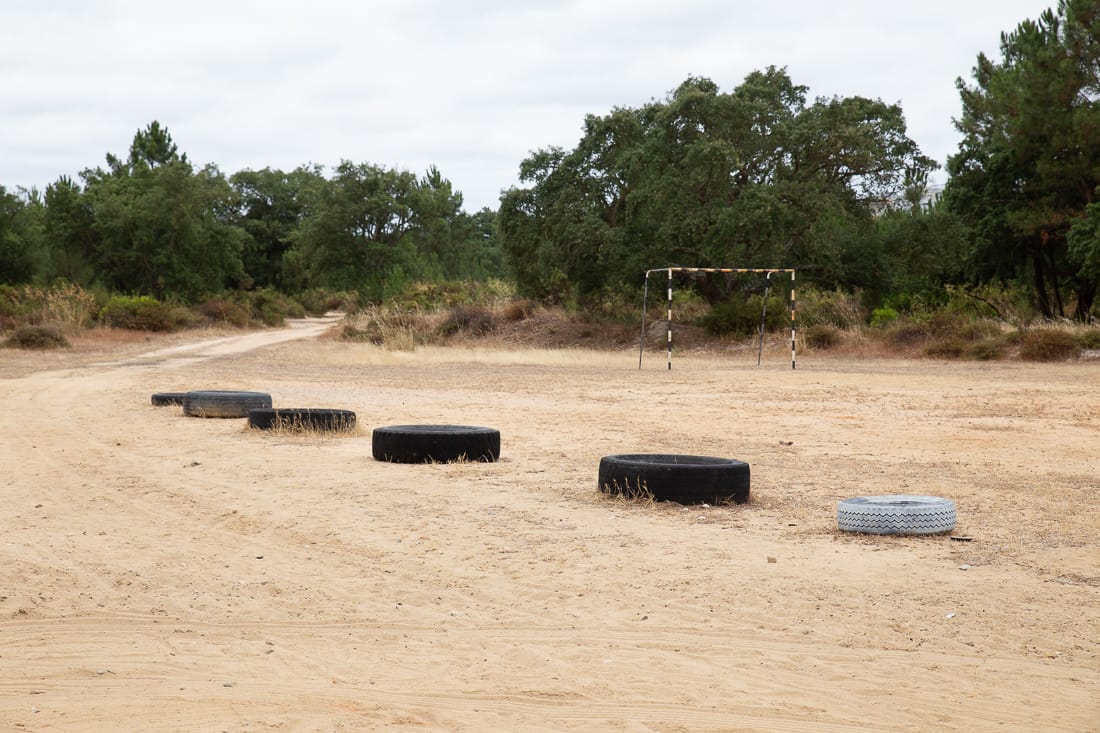 by Jorge Silva For most of its history, photography relied on stable forms: the print, the book, the exhibition, the collection. These forms gave images weight and legitimacy. Today, images circulate faster than any single structure can contain them. When circulation expands and structures remain fixed, photography risks becoming either noise or nostalgia.
“The question is no longer only what an image shows, but how it appears, where it appears, and for how long.” | 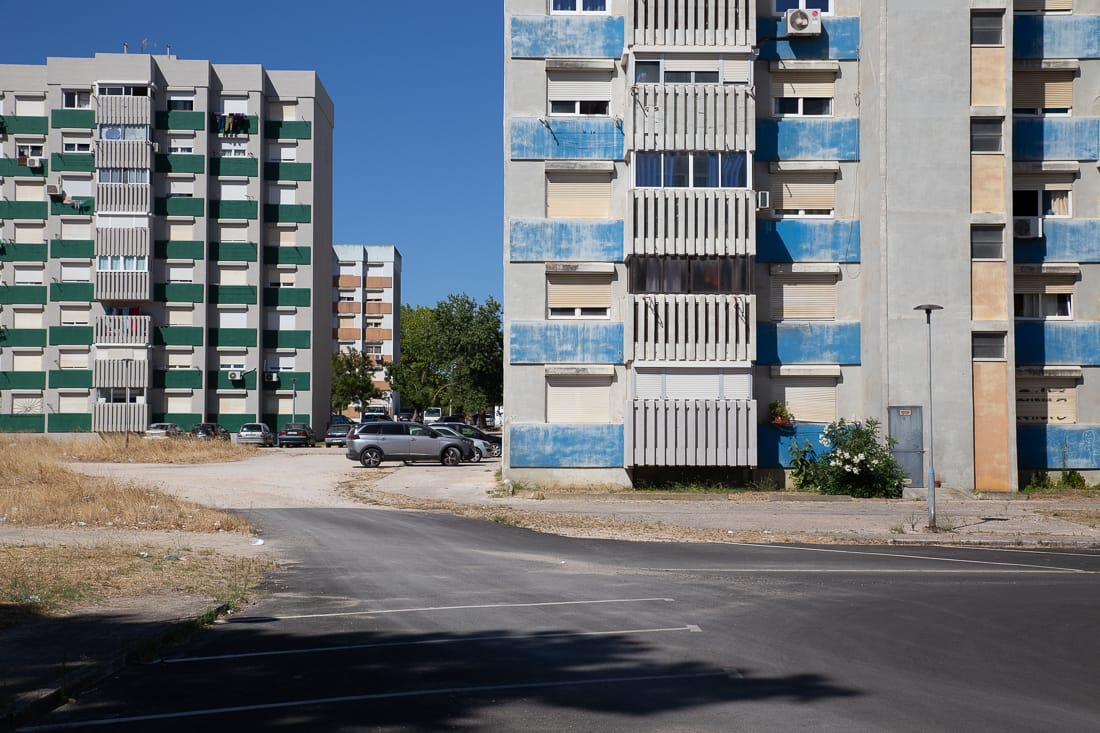 by Jorge Silva Without structures that allow images to move coherently, photography contracts. It repeats itself. It becomes trapped by habits, markets, or platforms designed for other purposes. With the right structures, photography expands — not by multiplying images endlessly, but by creating conditions where images can enter the world with intention, friction, and consequence.
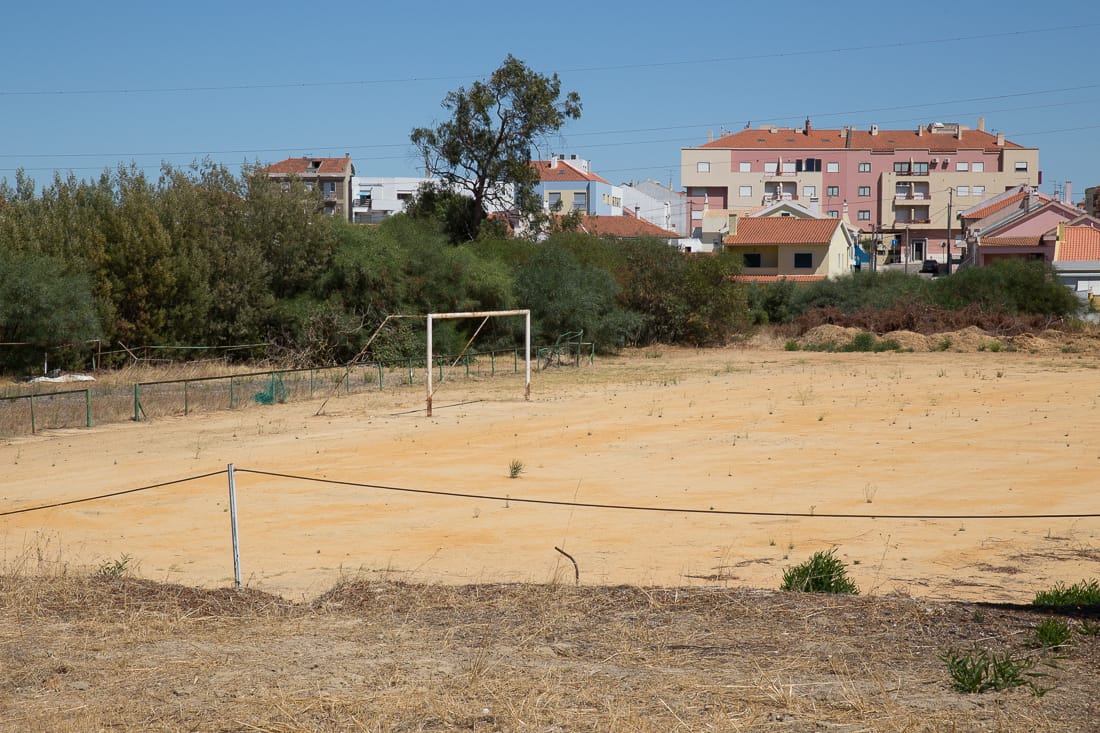 by Jorge Silva |
Coming Next:
New interview series
A new interview series is in preparation — conversations with voices from the international photography world as well as thinkers and practitioners from related fields. I’ll share more details as soon as the first conversations are ready to unfold.
“The ordinary is a very under-exploited aspect of our lives because it is so familiar.”
Martin Parr
Until next time,