- Galeria Local Newsletter
- Posts
- Issue 27: THE ARCHITECTURE OF FREEDOM
Issue 27: THE ARCHITECTURE OF FREEDOM
How Spinoza’s political geometry reframes freedom as a structure of growth rather than control

Jorge Silva
December 10, 2025
GALERIA LOCAL
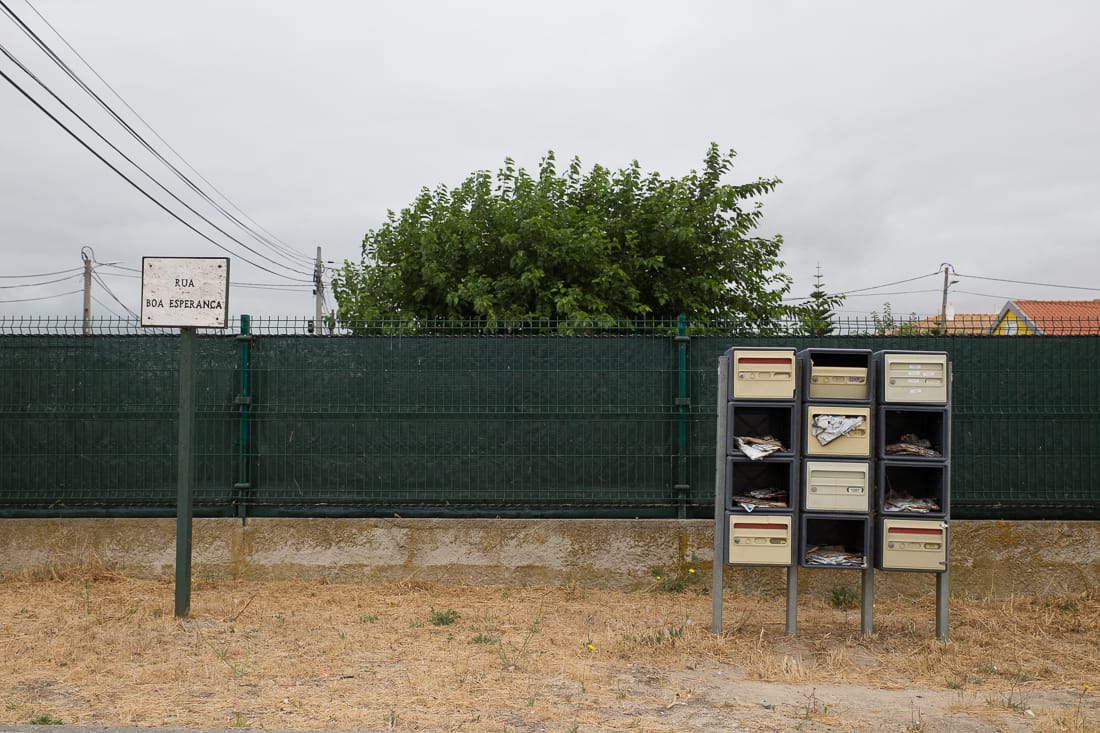
by Jorge Silva
Welcome — and thank you for reading.
This issue brings us to the final chapter of the Spinoza cycle. After exploring emotion, unity, and the determined self, we now turn to his political architecture — a vision in which freedom is not escape from necessity, but its most coherent expression. The essay traces how thought, speech, and collective life can expand or contract depending on the structures that surround them. | In Narrative Layers, I follow this geometry into photography: how practices, institutions, and individual ways of seeing widen or narrow our field of action. —Jorge |
Essay
The State, Speech, and the Architecture of Collective Freedom
Spinoza’s political philosophy begins from a sober observation: individuals driven only by their own desires inevitably collide. No amount of virtue, optimism, or good will can overcome this basic fact of human existence. As long as people pursue what increases their power to act, their trajectories will intersect, and conflict will arise. The question is not how to eliminate this collision—Spinoza is too realistic for that—but how to transform it into a structure where coexistence becomes possible.
The answer is the state. Not as a divine institution, nor as a moral authority, nor as a contract freely negotiated by rational agents, but as a necessity arising from the very laws of nature. Just as bodies in motion must find a stable configuration if they are not to destroy one another, human beings must establish a political order that channels their power rather than letting it burst chaotically in every direction. The state, for Spinoza, is not a cage imposed from outside but an equilibrium that emerges from within.
This is why Spinoza rejects the idea that the state’s purpose is to command obedience. Obedience on its own produces nothing but fear, hypocrisy, and instability. A political order that survives on repression is always one impulse away from collapse. Instead, Spinoza insists that the aim of the state is freedom: the preservation of each person’s ability to live according to their own nature with the greatest possible security. If individuals are to flourish, they must be protected not only from physical harm but from the arbitrary power of others—including the state itself.
From this principle follows one of Spinoza’s most radical claims: the state must guarantee freedom of thought and freedom of expression as foundational political rights.Thought cannot be controlled by force; attempts to suppress it generate resentment, resistance, and ultimately violence. Speech, likewise, cannot be meaningfully forbidden without damaging the very rational capacities that make collective life sustainable. A state that fears its citizens’ opinions is already a state that has abandoned reason.
Spinoza’s political order is therefore neither authoritarian nor anarchic. It is a structure in which power is coordinated rather than negated. Citizens relinquish certain permissions—chiefly the right to unrestrained force—not because they submit to a higher will, but because doing so increases their own security and capacity for action. The state, in turn, must restrict itself to guaranteeing this shared space of stability. Whenever the state exceeds this function and begins dictating belief or silencing dissent, it violates the very natural laws that justified its existence in the first place.
This is why Spinoza places extraordinary emphasis on the public sphere. A healthy state is one in which disagreement can be expressed without fear, where criticism does not threaten the political order but strengthens it, and where diversity of thought is seen as a sign of vitality rather than danger. The right to think freely is not merely a private liberty; it is the structural condition for the survival of the state itself. A society that suppresses thought destroys the very intelligence it requires to navigate the forces that shape it.
In Spinoza’s architecture, freedom is therefore not an escape from power but a configuration of it. Individuals remain determined by causes internal and external, but the state rearranges these causes so that each person’s power to act can expand rather than contract. Political freedom is not exemption from necessity; it is necessity organized in a form that allows human beings to live without fear and to develop their nature to its fullest expression.
For Spinoza, the sovereign is not the master of the people, and the people are not the subjects of a ruler. Both are elements of a single natural order. The stability of that order depends on clarity, reason, and the mutual recognition that freedom of thought cannot be separated from the well-being of the community. A state is strongest not when it controls opinions but when it enables them. True sovereignty lies not in force but in understanding.
In the end, Spinoza gives us a political metaphysics in which freedom and necessity meet. We do not transcend the world through politics; we inhabit it more intelligently. The task of the state is not to lift us beyond nature but to build a space in which the intelligibility of nature—its laws, its conflicts, its possibilities—can be lived without fear. A free society is not one without constraints, but one in which constraints arise from the very logic of human coexistence.
Freedom, in this final sense, is not a personal possession but a collective achievement: the clarity of many minds moving together within the same order of nature.
Narrative Layers
With Visita Guiada now concluded, this issue marks the beginning of Arcadia — a new body of work exploring urban gardens as spaces of tension and harmony. Shot over six years across Lisbon, the project examines how nature and human design coexist, conflict, and intertwine. The exhibition opens at Galeria Local in September 2025, with further chapters unfolding beyond the gallery’s walls.
EXPANSION AND CONTRACTION
In Spinoza, every movement of human life can be described as an expansion or a contraction of power. Emotions, thoughts, desires, institutions — all follow the same geometry. What widens our capacity to act, understand, and orient ourselves in the world is expansive. What narrows it, disperses it, or makes it incoherent is contractive. Freedom is not the absence of constraints, but the condition in which expansion becomes structurally possible.
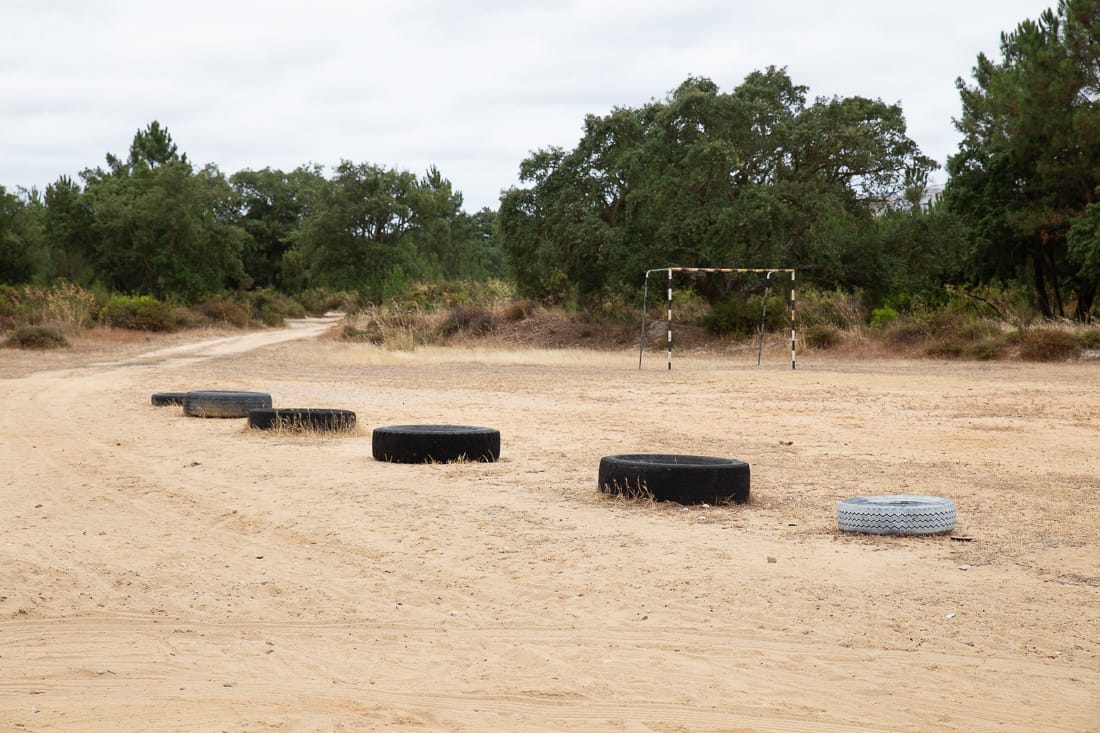 by Jorge Silva This same dynamic appears clearly in photography. A practice expands when perception widens, when attention sharpens, when the field becomes richer in possibilities. It contracts when images repeat a habit, when vision is restricted by predetermined frames, when access is controlled — by institutions, by fear, or by the photographer’s own expectations. The photograph that emerges from expansion carries a sense of openness: not because it celebrates liberty, but because it is made from a state in which perception is unobstructed. The photograph that arises from contraction feels closed, not because of its subject, but because its cause was narrow. “Some practices pull the individual into contraction; others open a field of expansion.” Spinoza’s political thought follows the same logic. A state expands when it enables the freedom to think, speak, question, and differ. It contracts when it fears its own citizens, when it limits expression, or when it concentrates power in ways that reduce the intelligence of the collective. Expansion strengthens the order; contraction corrodes it. A public sphere rich in viewpoints generates a wider, more coherent understanding of the world. A public sphere restricted to a single narrative, however polished, becomes fragile. |  by Jorge Silva “Freedom is not the erasure of limits but the arrangement that permits expansion.” In this light, photography participates in the architecture of collective freedom. It can widen the field — by showing what is usually unseen, by resisting imposed narratives, by bringing complexity into public space. Or it can contract it — when reduced to propaganda, when shaped only by institutions with power to control what enters the visible world. The medium becomes expansive not through its subjects but through the conditions that allow it to operate without fear: access, openness, plurality, dissent, curiosity. Expansion and contraction are not moral qualities. They are structural behaviours of perception and of the political world. But they run through photography with exact clarity. Every image is an index of the forces that shaped it — the freedoms that widened it or the pressures that reduced it. In Spinoza’s terms, the most vital photograph is the one in which necessity becomes intelligible, and the visible world opens rather than closes.. 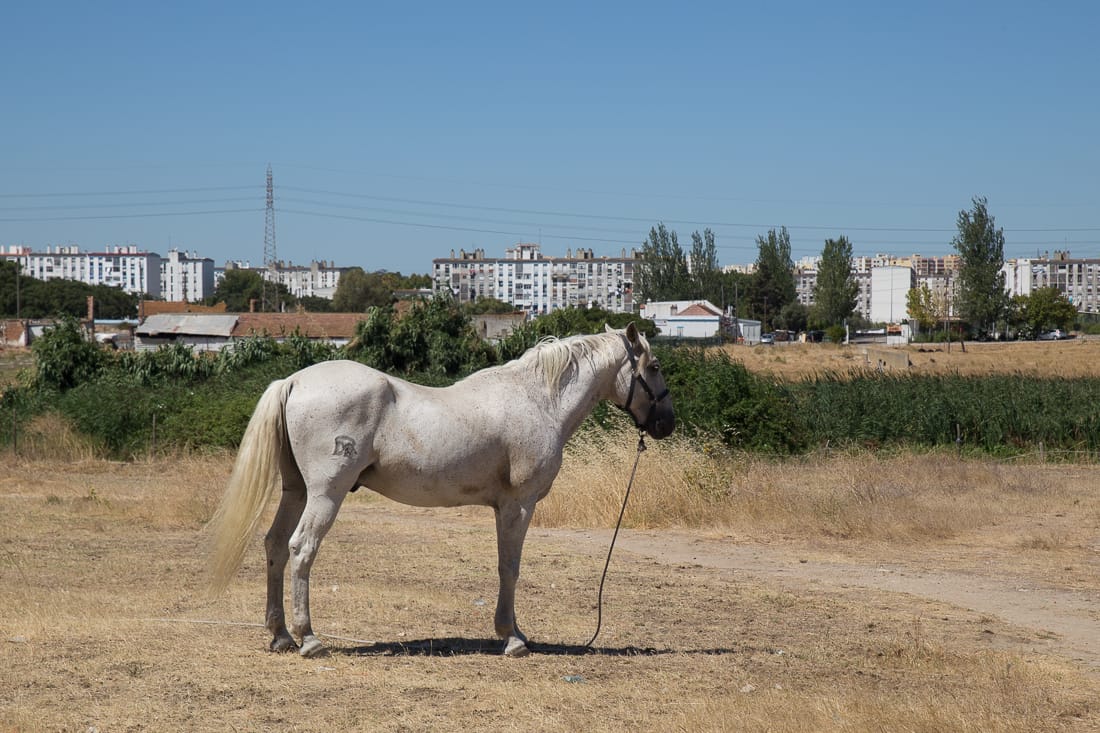 by Jorge Silva |
The Leibniz Series
The next cycle will turn to Leibniz.
After Spinoza’s universe of unity and necessity, Leibniz brings a radically different landscape — multiplicity, perception, and the unfolding of the infinite in every point. Over the coming issues, I’ll explore his ideas, letting the structure emerge as the thinking develops, accompanied as always by a reflection through the lens of photography.
Coming Next:
New interview series
A new interview series is in preparation — conversations with voices from the international photography world as well as thinkers and practitioners from related fields. I’ll share more details as soon as the first conversations are ready to unfold.
“The ordinary is a very under-exploited aspect of our lives because it is so familiar.”
Martin Parr
Until next time,