- Galeria Local Newsletter
- Posts
- Issue 25: Inner Motion, Outer Order
Issue 25: Inner Motion, Outer Order
Understanding emotion with Spinoza — and photographic awareness

Jorge Silva
December 03, 2025
GALERIA LOCAL
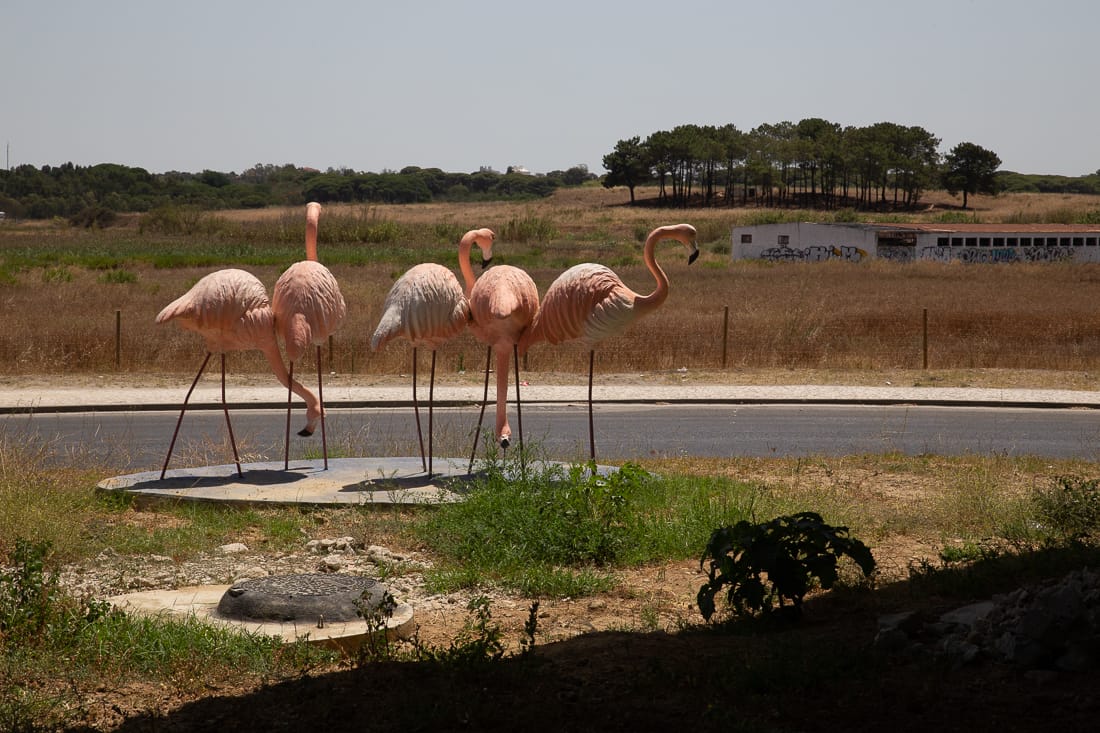
by Jorge Silva
Welcome — and thank you for reading.
This issue continues my five-part exploration of Spinoza, turning now to one of the most demanding and revealing aspects of his philosophy: emotion. Spinoza treats emotion with the same rigor he applies to nature, stripping away mysticism and moralism to show its underlying structure — a geometry of expansion and contraction, of movements that either widen or restrict our capacity to act. In the main essay, The Geometry of Emotion, I follow this line of thought to its consequences: how joy, sadness, desire and fear are not mysteries to be decoded, but intelligible modulations of power; how clarity, rather than control, becomes the true foundation of freedom. | In Narrative Layers, I reflect on these ideas through the lens of photography — on how emotion shapes perception, how images persist beyond the moments they record, and how the silent grammar of photographs mirrors Spinoza’s description of inward movement. If the main essay examines the mechanics of emotion, the photographic reflection shows how those mechanics become visible. Thank you for reading, and for following this ongoing study. Two more issues will complete the Spinoza cycle before the next series begins. —Jorge |
Essay
The Geometry of Emotion
Spinoza approaches emotion with the same precision he applies to nature. He refuses both mysticism and moralism. An emotion is not a message from another realm, nor a failure of the will. It is a movement in the body and the mind—two aspects of a single event—and it follows laws as stable as those that govern falling stones or growing plants. The starting point is his simplest and most powerful idea: every being strives to persist. Spinoza calls this conatus: the effort to continue in one’s own way of being. It is not a choice, nor an aspiration. It is the basic dynamic of existence—the force that animates every motion, every desire, every thought.
From this principle, emotion becomes intelligible. Joy, for Spinoza, is not a noble sentiment; it is the experience of our power increasing—a widening of the space in which we can act. Sadness is the opposite: the feeling of our power contracting, our ability to act diminished. Desire is the movement that arises when the mind perceives a path toward greater power. These definitions are not psychological in the modern sense. They are structural. They describe emotion as a geometry—changes in amplitude, in intensity, in the capacity to affect and be affected.
The pattern extends further: love is joy accompanied by the idea of an external cause; hate is sadness accompanied by the idea of an external cause; hope is an uncertain anticipation of joy; fear is an uncertain anticipation of sadness. Nothing here is arbitrary. Emotion becomes a map of how we move through the world, how other bodies intersect with our own, how imagination either clarifies or distorts the causes that shape us.
This is why reason does not oppose emotion in Spinoza. Reason is simply the mind seeing emotion without illusion, tracing it back to its cause. To understand an emotion is already to weaken its hold—not because understanding suppresses feeling, but because understanding dissolves the confusion that magnifies it. Fear amplified by ignorance becomes terror; fear understood becomes caution. Desire amplified by fantasy becomes obsession; desire understood becomes direction.
Spinoza never asks us to extinguish emotion; he asks us to perceive it accurately. When we do, emotion becomes a source of coherence rather than fragmentation. Joy reveals the paths along which our power grows. Sadness becomes information about the forces that diminish us. Desire shows us where our nature is trying to expand. The task is not to overcome emotion but to allow it to become transparent—not in the sense of fading, but in the sense of becoming intelligible.
An emotion that has been understood is still felt, but it no longer carries us blindly. It becomes aligned with our nature, instead of opposing it. This is why Spinoza can say that the highest form of freedom is not control but clarity. The more we grasp the geometry of our inner life, the more we act from the necessity of who we are, and the less we are thrown back and forth by impulses without origin.
Emotion, in this light, is neither enemy nor guide. It is a modulation of our power, a signal of how we are situated within the larger order of nature. To understand it is not to rise above the world, but to stand more firmly inside it. This is the geometry of emotion: a way of seeing inward motion as part of outward order, a way of reclaiming what moves us, and a way of acting not from confusion, but from coherence.
Narrative Layers
As Spinoza turns his attention to emotion, I find myself examining how my emotional life shapes the way I look. Photography has always been a laboratory of perception, a place where inward states and outward forms reveal their hidden correspondences. In each photograph, something of this relation becomes visible: a registration of how the world acts upon me, and how I respond in return. What follows is a reflection on that exchange — on emotion as movement, on clarity as freedom, and on the way a photograph quietly records the geometry between the two.
THE MECHANICS OF EMOTION IN PHOTOGRAPHY
In Spinoza, an emotion is not a mystery or a message from another realm. It is a movement — a modulation of power — something that increases or diminishes our ability to act. Photography, by contrast, is still. It freezes what moves. That tension is the starting point. A photograph suspends motion, but not emotion. Some portraits look as if they are about to speak; a gesture is halfway through unfolding, yet held in place forever. What is frozen is not the movement itself, but its vibration, its amplitude. Like a musical score, the photograph becomes a notation of feeling — an object that the viewer reanimates. Music overwhelms; photography requires a more deliberate state of mind. But once you enter that state, the emotional wave contained in the image can move you with equal force.
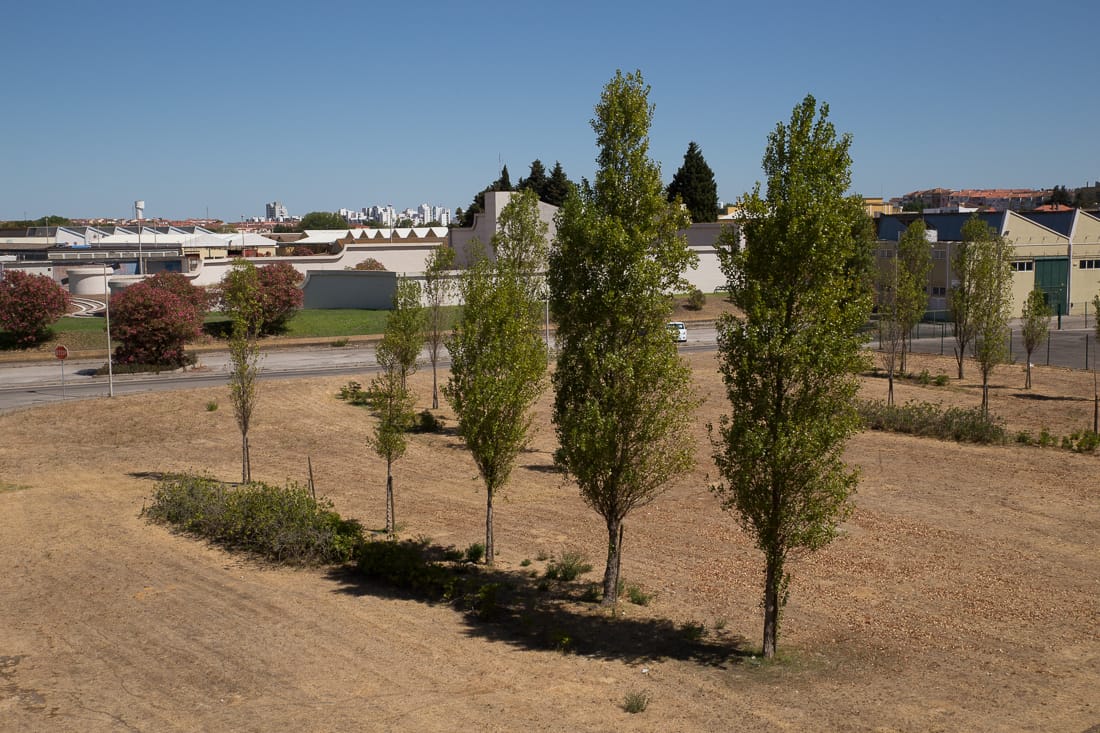 by Jorge Silva This leads naturally into Spinoza’s idea of precision. He treats emotion structurally, almost mathematically. Can a photographer approach emotional response with comparable clarity? Perhaps only partially. We can articulate certain principles, certain shared patterns of perception, but emotions themselves cannot be measured; there is no instrument capable of quantifying their intensity. And yet photography invites rigorous attention. Its silence demands analysis. Still, divergence remains essential. Not everything needs to align. Some photographers think clearly and speak clearly; others produce clarity without words. Originality often arises at the edges, where people do not conform to the dominant frameworks. Precision, in this sense, does not eliminate mystery; it sharpens it. “A photograph is itself a form of persistence, an extension of reality. Things that have ceased to exist continue, for a while, through the image.” Mysticism is something else entirely — the fog, the aura, the non-verbal posture that conceals emptiness. Photography has its share of that, but it also contains a deeper kind of mystery, one that resists verbalisation without becoming obscure. The image is silent, but not mute. It communicates through tension, through arrangement, through presence. Real mystery is accessible through observation, presence, and thought. It is not an excuse for vagueness but an invitation to look more deeply. The real enigma of photography is that it reveals far more than it can say, and what it cannot say becomes the ground for thinking. But photography also carries moral weight. Because it deals with real bodies, real conditions, real vulnerability, it inevitably intersects with morality. Nudity, consent, war, poverty — all these enter the frame. The gallery may forgive what social media prohibits. Beauty softens what would otherwise provoke resistance; ugliness exposes what we try to avoid. Photography becomes a negotiation between courage and restraint, between curiosity and responsibility. It is one of the few spaces where we can confront certain realities without needing to defend our reactions aloud. This silence allows a certain honesty. But it never removes the ethical tension underneath. |  by Jorge Silva And then comes Spinoza’s most potent idea: conatus — the effort to persist. Persistence is everywhere in photography. The photograph is itself a form of persistence, an extension of reality. Things that have ceased to exist continue, for a while, through the image. As Spinoza says the mind is the idea of the body, perhaps the photograph is the idea of the world — its extension into form. Sometimes it feels as if reality uses the photographer as its medium, its instrument of continuation. Here, power is not domination but direction. The joy I feel when photographing is not the joy of imposing myself on the world, but the joy of having a direction, of being aligned with what I love. Sadness enters when I cannot act, when external forces diminish my ability to move. Desire appears when I see a possible path: a project, a book, a form, or even simply the future of photography itself — its place in a world increasingly shaped by generative images. “Real mystery is accessible through observation, presence, and thought. The image is silent, but not mute.” Emotion, in this sense, becomes a navigation tool rather than an obstacle. It shows where I am situated within the larger order of things. When an emotion becomes intelligible, it does not disappear; it becomes clear. It aligns rather than distorts. This is Spinoza’s definition of freedom: not control, but lucidity. To understand one’s emotional movement is to stand more firmly inside the world, not above it. Photography operates in the same way. It is a geometry of attention, a way of seeing inward movement reflected in outward form. The image becomes a brief alignment of inner and outer motion — a moment of coherence in the flow of uncertainty. And perhaps that is the real persistence: not the survival of things, but the survival of clarity itself.  by Jorge Silva |
Coming Next:
New interview series
A new interview series is in preparation — conversations with voices from the international photography world as well as thinkers and practitioners from related fields. I’ll share more details as soon as the first conversations are ready to unfold.
“The ordinary is a very under-exploited aspect of our lives because it is so familiar.”
Martin Parr
Until next time,