- Galeria Local Newsletter
- Posts
- Issue 24: The Thought-World of the Photograph
Issue 24: The Thought-World of the Photograph
Part II of a Spinoza Cicle: mind, body, and the image as one event

Jorge Silva
November 18, 2025
GALERIA LOCAL
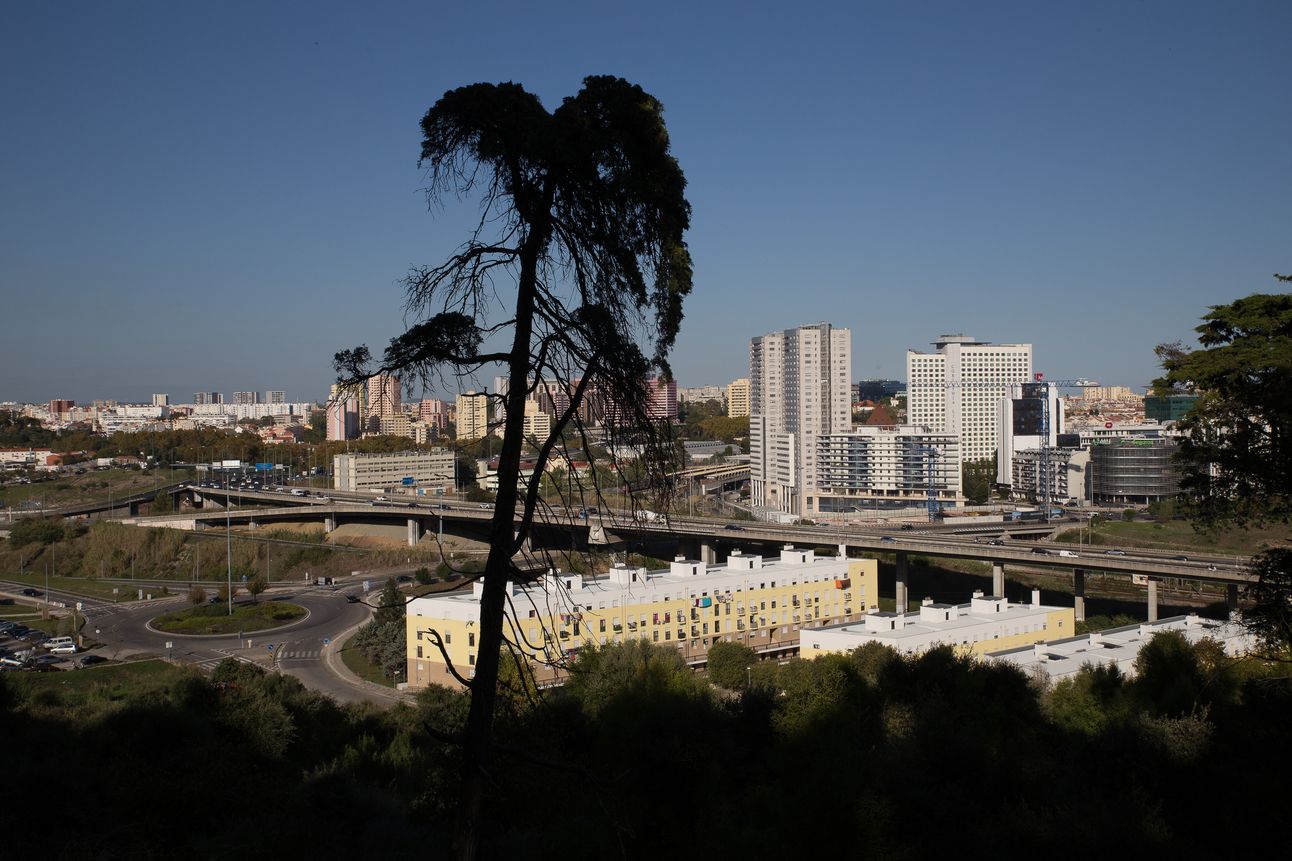
by Jorge Silva
Welcome — and thank you for reading.
This issue continues the five-part cycle inspired by Spinoza. Last week I explored the first dimension of his thought; today’s essay turns to a second: the unity of mind and nature, and what it means to act — and to see — from within that unity rather than outside it. As before, Narrative Layers mirrors the main essay from the photographic plane. The two texts run in parallel: the main essay develops the conceptual line, and Narrative Layers responds from within the act of looking — through attention, embodiment, and the image. | On 23 November, I will present the second edition of Arcadia offering you another opportunity to experience the work. If you’re in Lisbon and able to come, I would be glad to see you there. —Jorge |
Essay
Unity of Mind and Nature
We often imagine the mind as a private chamber, sealed off from the world, illuminated only by its own thoughts. This separation feels natural: the body touches things, but the mind observes them from within. Yet this division begins to falter the moment we examine it. Every sensation, every idea, every impulse arises from the body’s encounters with the world. Thought is not outside nature; it is nature continuing itself in another register.
Spinoza breaks decisively with the ancient dualism that placed mind and body on different planes. For him, they are two expressions of the same reality, two attributes of one infinite substance. Under the attribute of extension, the body moves and is moved. Under the attribute of thought, the mind thinks and is thought. But these two do not interact; they correspond. They are the same event, seen from two sides. The world does not divide itself between the material and the mental—it reveals itself simultaneously in both forms.
This unity means that the mind is not a spectator but a participant. To perceive something is already to be altered by it; to think is to register the body’s position within the wider web of causes. Consciousness is not a detached mirror but a mode of connection. We do not stand apart from nature—we are one of the ways it understands itself.
The implications of this view are profound. If mind and body are one process, then self-knowledge cannot be achieved by introspection alone. One must learn the body’s rhythms, its tendencies, its vulnerabilities, its strength. The clarity of thought depends on the clarity of being. Confusion arises not from the world but from the mind’s resistance to acknowledging its place within that world. We misinterpret our emotions because we misinterpret ourselves, imagining that the mind floats far above the currents that move the body.
But once the unity becomes visible, the confusion begins to dissolve. Emotions cease to be intrusions and become expressions—movements of the same substance that thinks. Perception becomes less a window and more a relation. The world ceases to be an external set of objects and becomes a continuity in which we are embedded. There is no inner and outer; there is only connection and degree.
To think, then, is not to withdraw from the world but to enter it more fully. Understanding is not transcendence but intimacy. The more we comprehend the body’s place in nature, the more our thoughts align with nature’s order. The sense of isolation fades. The boundary between self and world softens. Existence appears not as a conflict between opposing substances but as a single fabric of causes unfolding through us.
In this unity, the mind becomes spacious. It no longer clings to the illusion of independence. It learns to trust the depth of the order that sustains it. Thought becomes quieter, more grounded, more precise. And in that quietness, one discovers a different kind of freedom—not the freedom of escape but the freedom of belonging. The freedom that comes from recognizing that everything we are is woven from the same necessity that shapes the world.
We are not observers of nature; we are nature observing itself.
Narrative Layers
As I continue reading Spinoza, I find myself returning to my own practice, not to illustrate his philosophy, but to test the depth of my perceptions against it. Photography has always been the place where my thinking becomes visible — a space where awareness, movement, and the world align into a single gesture. In this sense, each photograph is less a representation than an event: a moment where thought and reality meet in the field of vision. What follows is a reflection on that unity, written from inside the act of looking.
THE THOUGHT-WORLD OF A PHOTOGRAPH
There is a certain mode of attentiveness in photography—quiet, gradual, emerging—when seeing and thinking begin to move alongside one another. Not as a sudden moment, but as a way of being in the field. The mind does not float above reality, inventing a picture out of nothing; nor does the body wander blindly through space. Something tighter, more intimate happens. You start to sense that perception and understanding are not separate realms, even if they don’t always unfold at the same pace. Sometimes insight comes months later, while editing. But the act of photographing initiates the relation: attention and comprehension are part of the same gesture, however long it takes to reveal itself.
 If I cling to the mental image I brought from home—if I chase the picture I think I should make—I stop seeing altogether. I photograph a fantasy, not a place. The mind detaches from the body, and the photograph grows hollow. But when I walk without that burden, when I move through the world with alertness rather than expectation, vision sharpens. My attention settles. My body finds its distance. My eye pauses—not in hesitation, but in recognition. And the decision to photograph becomes clear, not automatic: a conscious alignment between perception and intent. “Photography has always been the place where my thinking becomes visible — a space where awareness, movement, and the world align into a single gesture.” This is what it means to think with the eyes. It is not metaphor; it is lived experience. Aesthetic decisions arise before verbal thought appears. Light, structure, tension—these are not decorations of the scene but the grammar of its visible order, the way forms relate to one another before we analyse them. To see them is already to understand something about how the scene holds together. A photograph becomes the point where form and meaning meet, where visual coherence hints at an underlying cause. A purely aesthetic image can be seductive but thin; a purely conceptual one can feel heavy but inert. A photograph gains strength when the visible arrangement carries inner coherence—when perception and significance move toward each other instead of apart. What intrigues me most is that this coherence does not come from imposing myself on the scene. It comes from approaching it without separation—in the Spinozist sense of intimacy rather than transcendence. I don’t rise above what I photograph; I enter it more fully. |  “A photograph is not the world observed from outside. It is the world observing itself through the photographer.” The self doesn’t dissolve, but its noise quiets enough for attention to work cleanly. The world informs my position, and I respond with clarity. The final image is not my view imposed upon the world. It is the world expressing itself through my way of looking. And here lies the true presence of the photographer—not in style, nor in signature, nor in the visibility of the maker behind the image. The photographer is present because the act of seeing cannot be separated from the world being seen. Every photograph is shaped by the body that stood there, the distance it chose, the rhythm of its breathing, the curiosity that pulled it closer. Presence is not a choice; it is a condition. The clearer I understand my own nature—the way I respond to light, to space, to human faces—the more original my images become. Originality is not invention but alignment: acting from the necessity of one’s own way of perceiving. A photograph, then, is not the world observed from outside. It is the world observing itself through the photographer. When the shutter closes, I am not a spectator capturing an external reality; I am one element inside a larger configuration, momentarily aware of its geometry. The photograph is the residue of that awareness—a brief alignment of body, mind, and world. A unity made visible.  |
Coming Next:
Arcadia’s Second – 23 November 2025
Following its opening at Galeria Local in September, Arcádia returns this November for its second edition. The exhibition reflects on the fragile borders between the natural and the constructed city, inviting new audiences to experience its quiet tension firsthand.
ECHOES OF A MYTH
Rooted in the ancient myth of Arcadia — the dream of a perfect natural refuge where order and freedom meet — this project traces how that ideal mutates in the context of the contemporary city. Urban gardens may appear serene, but they are shaped by competing forces: discipline and spontaneity, geometry and wildness, intention and resistance.

“The ordinary is a very under-exploited aspect of our lives because it is so familiar.”
Martin Parr
Until next time,