- Galeria Local Newsletter
- Posts
- Issue 12: Davide Degano: On Belonging, Representation, and the Photobook
Issue 12: Davide Degano: On Belonging, Representation, and the Photobook
Plus two reflections on Rembrandt and the silence of images

Jorge Silva
July 29, 2025
GALERIA LOCAL

By Davide Degano - Romanzo Meticcio
Welcome — and thank you for reading.
We begin with an interview that’s been a long time in the making: a rich exchange with Italian photographer Davide Degano, whose work confronts questions of identity, marginality, and memory in contemporary Italy. From philosophy to photobooks, from colonial history to family contradictions, Degano’s voice is sharp, generous, and necessary. In the second half of the issue, I continue the Narrative Layers experiment — writing alongside Seeing Things, Emily LaBarge’s long-form essay on perception, history, and persistence. This week, I respond to two of its quieter provocations: the idea that Rembrandt painted what cannot be seen, and the belief that images are mute things — that we must resist the urge to speak over what resists language. | These reflections don’t seek closure. They’re pauses. Questions. A way of staying with what looks back at us without explanation. Also: in this issue, you have the chance to receive one month of premium access to the newsletter. See how in the Coming Next section below. — Jorge |
Interview
AT THE MARGINS OF IDENTITY
A Conversation with Davide Degano
This week, I’m sharing highlights from a probing and illuminating interview with Italian photographer Davide Degano — whose work spans themes of marginality, post-colonial memory, and identity in contemporary Italy. We spoke about his evolving practice, the ethics of representation, and the layered narratives behind his acclaimed projects Romanzo Meticcio, Sclavanie, and the in-progress Do-li-na.

From Philosophy to Photography
Degano’s journey into photography is rooted in an early background in philosophy. “I wish photography were more often seen as a tool for critical thinking,” he told me. “It’s not about truth — it’s about raising questions.” That idea echoes throughout his work, which blends visual storytelling with historical and political research.
Currently pursuing two master's degrees and preparing for a PhD, Degano balances fieldwork with academic inquiry: mornings in the studio reading and writing, followed by deliberate, slow-paced shooting using large-format cameras. His portraits often emerge from long conversations and mutual trust. “Photography is always collaborative,” he explains. “It’s not just about taking a picture — it’s about creating space for the other to be seen.”
 By Davide Degano - Romanzo Meticcio |  By Davide Degano - Romanzo Meticcio |
Margins as Method
In Romanzo Meticcio, Degano explores the intersection of multicultural identity, suburban fragmentation, and Italy’s silenced colonial past. He draws on personal history — with Colombian and Slovenian heritage — to question what it means to belong. The project combines archival research with original photography to challenge ideas of “pure” Italian identity.
“The idea of the margin comes from bell hooks,” he says. “It’s a space of resistance, of cultural renewal. And when you point the camera at the margin, you’re also shifting what counts as the center.”
This extends to his critique of urban planning and cultural narratives: from Mussolini’s ‘foundation cities’ to contemporary media portrayals that still reinforce racial stereotypes. For Degano, representation is political — but it also begins at home. “I grew up in the suburbs I photograph. I know them as a local, but I try to see them with fresh eyes — including the contradictions in my own family.”
 By Davide Degano - Sclavanie |  By Davide Degano - Sclavanie |
History, Fiction, and the Photobook
Degano is particularly drawn to the photobook as a format for narrative and ambiguity. “Unlike a novel or a film, a photobook is incomplete. The viewer must participate — it requires interpretation.”
In Romanzo Meticcio, he uses minimal text to support sensitive themes like fascism, racism, and erasure. By contrast, his earlier project Sclavanie explored depopulated mountain villages in Friuli and the cultural survival of linguistic minorities. That project has now evolved into Do-li-na, which investigates the 1923 Gentile law and how oral traditions resist assimilation. “Myth and memory offer tools,” he notes, “to challenge the supposed truth of the documentary image.”
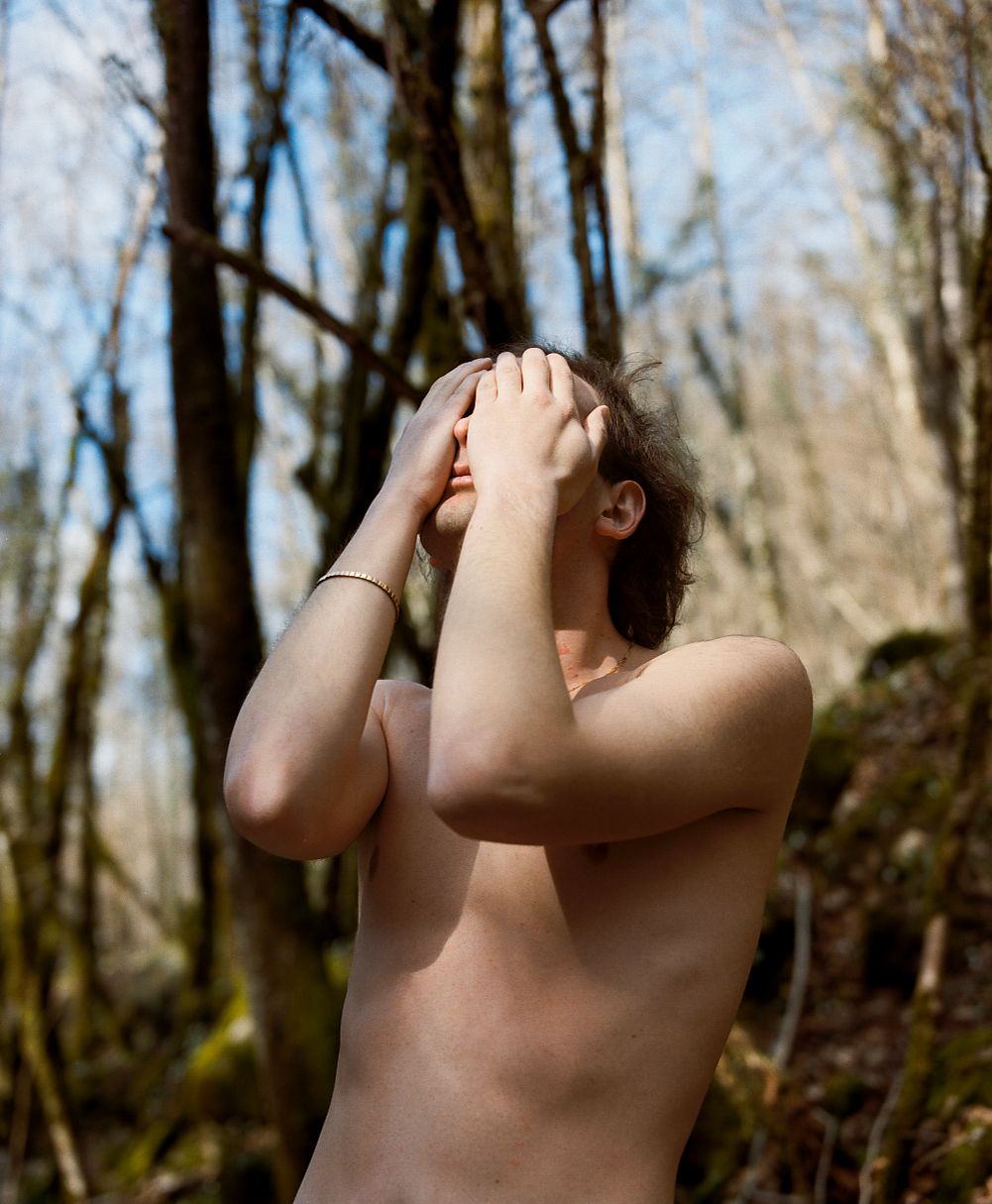 By Davide Degano - Do-li-na |  By Davide Degano - Do-li-na |
Reclaiming the Narrative
Degano’s broader mission is to reframe stories from the margins — not to victimize, but to dignify. “If you grow up without seeing yourself represented, you start believing you’re not worth representing. I want to change that.”
This ethic runs through both his photographic and curatorial work. With exhibitions planned in Sicily and Canada, and a new book on the horizon, Degano continues to push photography toward dialogue, doubt, and deeper historical engagement.
 By Davide Degano - Do-li-na | 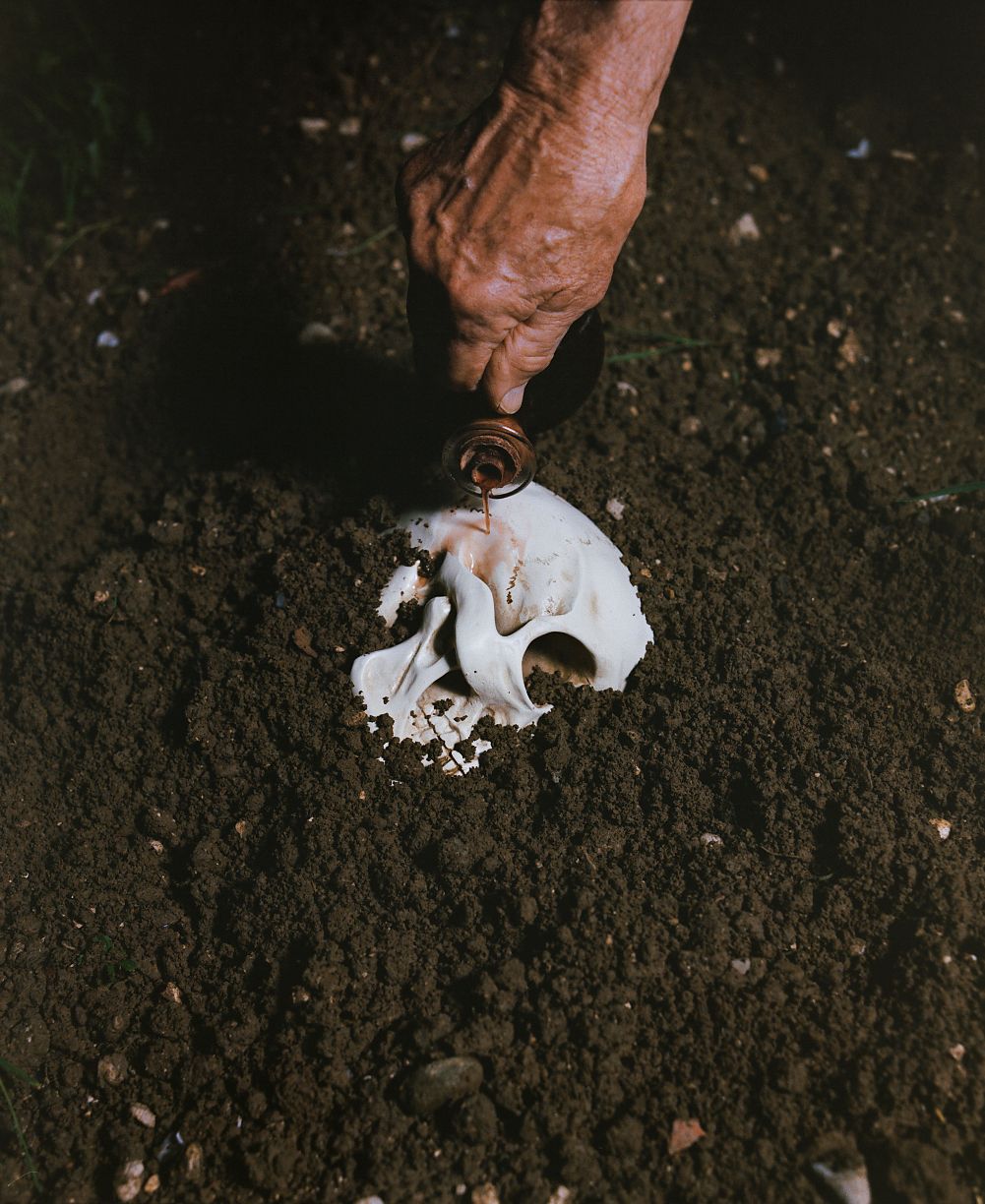 By Davide Degano - Do-li-na |
Premium subscribers get early access to the full video interview at the link below:
Narrative Layers
Continuing the Experiment
This is the second chapter in my ongoing response to Emily LaBarge’s Seeing Things, a long-form essay published in Granta. Rather than analyzing the piece, I’ve been walking alongside it — letting its layered meditations on memory, vision, and historical presence unfold into my own reflections.
LaBarge’s writing resists neat conclusions. She keeps asking: When should one stop seeing? And she never does — she keeps walking, noticing, questioning. These reflections are my attempt to do the same.
This week, I return to two ideas that struck me with particular force: the suggestion that Rembrandt painted what could not be seen — solitude, mortality, the unspeakable — and the assertion that images are mute things, whose silence should not be violated by too many words.
LAYERS OF SEEING
Painting what cannot be seen
On Rembrandt’s Gaze
Emily LaBarge writes that Rembrandt painted what could not be seen — and the phrase struck me. What does it mean to represent what can’t be seen? Mortality, solitude, the unspeakable. It stayed with me, so I looked.
I saw The Jewish Bride, The Return of the Prodigal Son, a late Self-Portrait. The paintings felt frontal, emotionally charged, almost overwhelming. Among Rembrandt’s contemporaries, portraiture often aimed to flatter or idealize — but his work seemed drawn to something else. What struck me most was the humanity in the expressions, the vulnerability, the way each figure seemed to offer themselves — to the camera, so to speak. They could be photographs — not in style, but in the intensity with which they hold presence, compelling you to keep looking.
 “Life etches itself onto our faces as we grow older, showing our violence, excesses or kindnesses.” One work felt different. The Anatomy Lesson puzzled me. The faces of the men looked strikingly similar, and the arrangement had a theatrical tone. It reminded me, oddly, of David LaChapelle — stylized, deliberate, almost too controlled. A quick search revealed it was a public commission, a group portrait for a guild of doctors. It had to show dignity, intelligence, respectability. Still, even here, Rembrandt placed a lifeless body at the center of the image — lit in stark contrast — as if to suggest that all this knowledge, all this structure, is still circled around death. The Silence of the ImageOn Muteness and Interpretation “In the beginning was the Word.“ |  A photograph holds a moment, but it also suspends it. What it shows is never the full story. Life continues outside the frame — and we know it. That knowledge creates a tension: we see what is stilled, but we feel what is lost. Especially in portraits, this muteness can become unbearable. The face looks back, but it says nothing. The same silence echoes across culture. It lives in sacred texts, in ancient symbols, in the mysteries of history and art — things we keep returning to, trying to decode. We keep screaming into the void, hoping for an answer, but all we receive back is the echo of our own voice, in the form of interpretation. And what we call meaning — could it simply be this: a reflection of the void within us, projected onto what refuses to speak? We write, explain, assign meaning, and often the structure we build — the story, the theory, the language — becomes too much. It rises like a pyramid of words, and the gaze is mummified inside: preserved in form, but sealed off from breath. And then we kneel down and pray — listen to the silence, waiting for the secret word to be revealed.  |
Arcadia’s Opening – September 2025
Opening at Galeria Local in September 2025, the Arcadia exhibition invites a fresh gaze on urban nature. It challenges viewers to see gardens as living dialogues, where human design meets nature’s persistent voice.
Coming Next:
Zackery Hobler
In the final August issue of Galeria Local — arriving Tuesday, August 26 — we’ll be publishing a conversation with Canadian photographer Zackery Hobler. Based in Toronto, Hobler’s work unfolds through long walks, quiet observation, and contemplative photobooks such as Beneath Two Skies and Segments & Leaves Laying About. His images explore the porous boundary between landscape and emotion — moments in nature that seem to echo inner states.
In the meantime, I invite you to explore Zackery’s work:
👉 View Zackery Hobler’s website
And here’s a small invitation:
If you’d like to shape the conversation, feel free to send me a question — anything sparked by his work or your own reflections. Everyone who submits a question will receive one month of premium access to the newsletter.

By Zackery Hobler
“The ordinary is a very under-exploited aspect of our lives because it is so familiar.”
Martin Parr
Until next time,