- Galeria Local Newsletter
- Posts
- Issue 10: Kioskzine Feature: Augusto Brázio
Issue 10: Kioskzine Feature: Augusto Brázio
Plus: a surre night in Adeganha from the FIRELINES series

Jorge Silva
July 15, 2025
GALERIA LOCAL
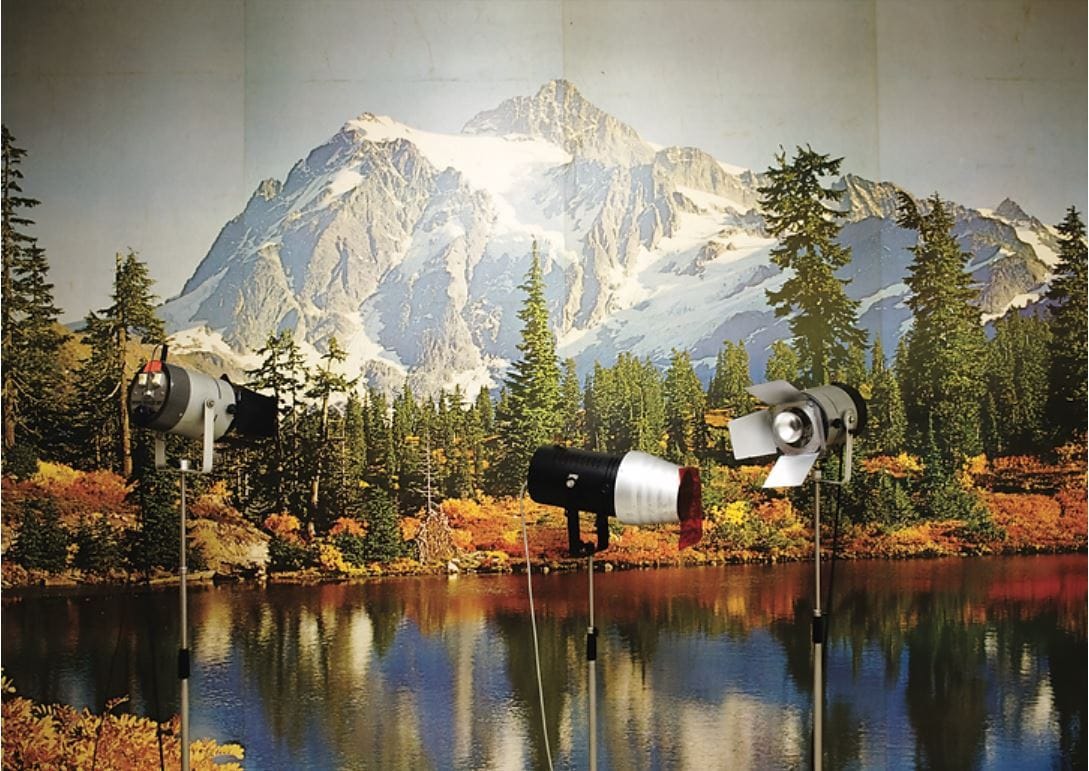
by Augusto Brásio
Welcome — and thank you for reading.
As part of our ongoing collaboration with Kioskzine, this issue highlights the work of Augusto Brázio, whose contribution to Kioskzine 6.0 re-edits a previously commissioned series into a renewed visual essay. Known for his nocturnal palette and quiet intensity, Brázio’s work blurs the line between document and reverie, offering portraits not just of people but of presence itself. In Narrative Layers, we return to Adeganha for Part Two of the FIRELINES chronicle. | After the chaos and panic of the climb, this chapter unfolds in an entirely different key: a stranger’s open door, a sofa, and a night spent with RTP Memória humming in the dark. The mountain fades, but the atmosphere lingers. — Jorge |
Spotlight
Augusto Brázio — A Reframed a Republic
Augusto Brázio is one of nine photographers featured in Kioskzine 6.0. His contribution to the zine, published in January 2023, revisits a series originally produced for the Centenary of the Portuguese Republic — part of a public commission titled Diário da República. In this new form, Brázio strips the images from their institutional framing and re-presents them with “a new sequence and other clothes,” as José Farinha put it during our 2023 interview. Not quite a republic of the past, and not exactly the present either — it’s a re-edit that becomes, in many ways, a re-reading.
The response was immediate. The special edition sold out quickly, and the work was added to the Kioskzine exhibitions at Fórum da Maia and IPI Lisboa. Farinha described the collaboration as “very, very interesting” — and it’s easy to see why. Brázio’s practice is difficult to pin down: he moves between documentary and fiction, poetry and precision, often blending flash-lit intimacy with a deep curiosity about place and people.
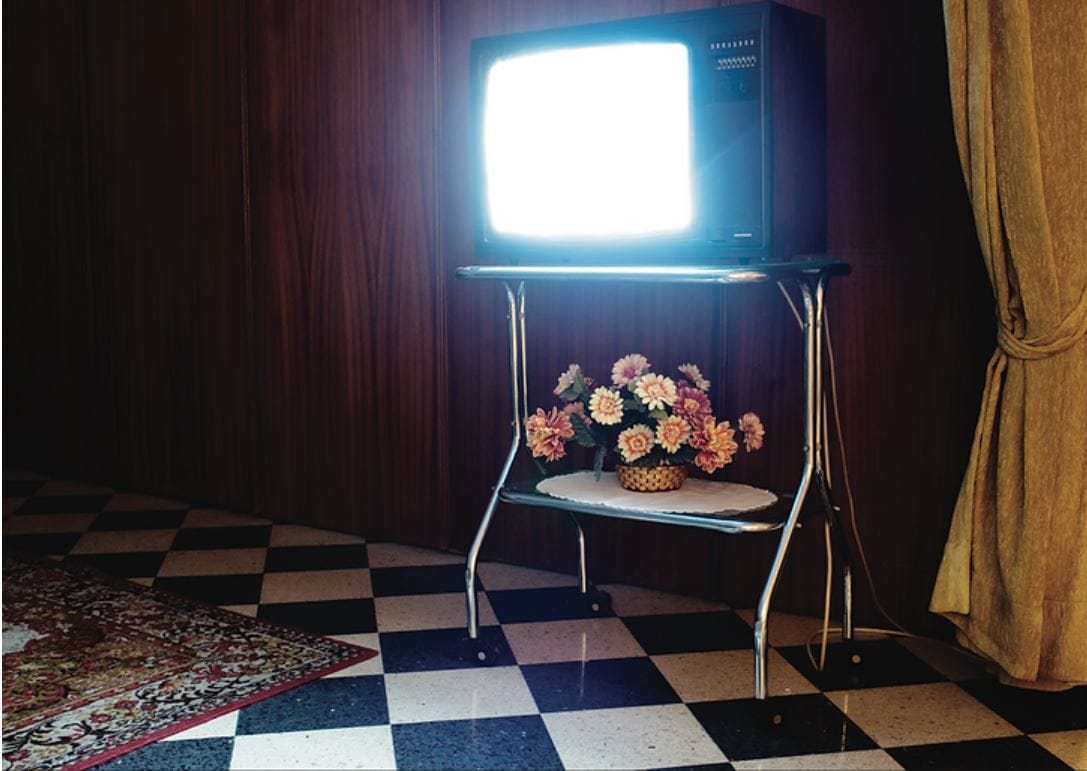 by Augusto Brásio | 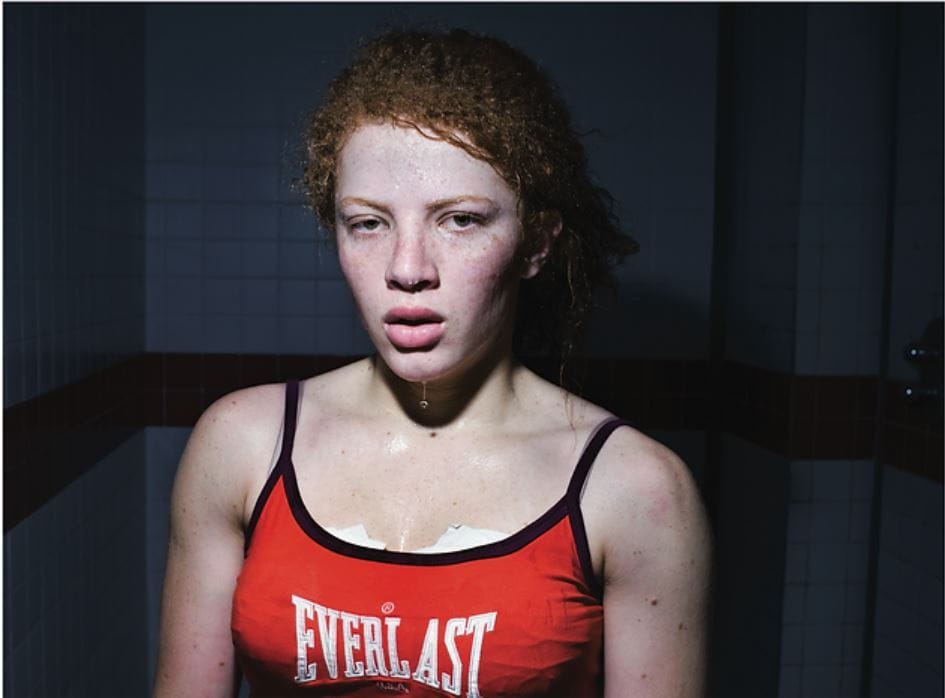 by Augusto Brásio |
His website opens a door into a strange, luminous world. Cota 470, from 2003, documents what seem to be miners or night laborers. The light is harsh, direct, necessary — but strangely beautiful. Bang, in contrasty black and white, becomes abstract and theatrical: intimacy in high relief. Works like Sopé, Rasgo, and Sor — part of the long-term project Viagens na Minha Terra — offer a night-side view of Portugal’s interior, where faces emerge like apparitions from the dark. It’s not just portraiture — it’s presence.
“He photographs what remains — sometimes strange façades, sometimes bodies in motion, sometimes nothing at all — with theatrical lighting and an uncanny eye for suspended moments.”
Even his quieter work — such as Vende-se, a series on closed stores across Lisbon, Porto, and the Algarve — feels charged with disappearance. It’s a kind of portraiture too, just without people. He photographs what remains — sometimes strange façades, sometimes bodies in motion, sometimes nothing at all — with theatrical lighting and an uncanny eye for suspended moments. The photographs resist categorization. They’re fragmentary, often ambiguous, and always meticulous. One might say they’re informed by unease — but they’re also undeniably seductive.
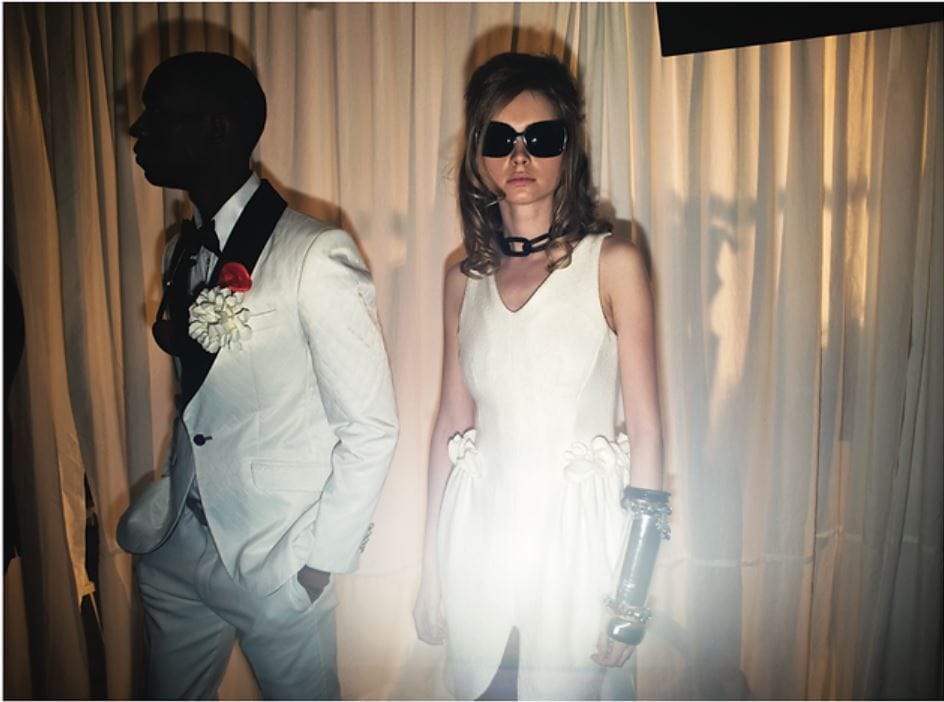 by Augusto Brásio | 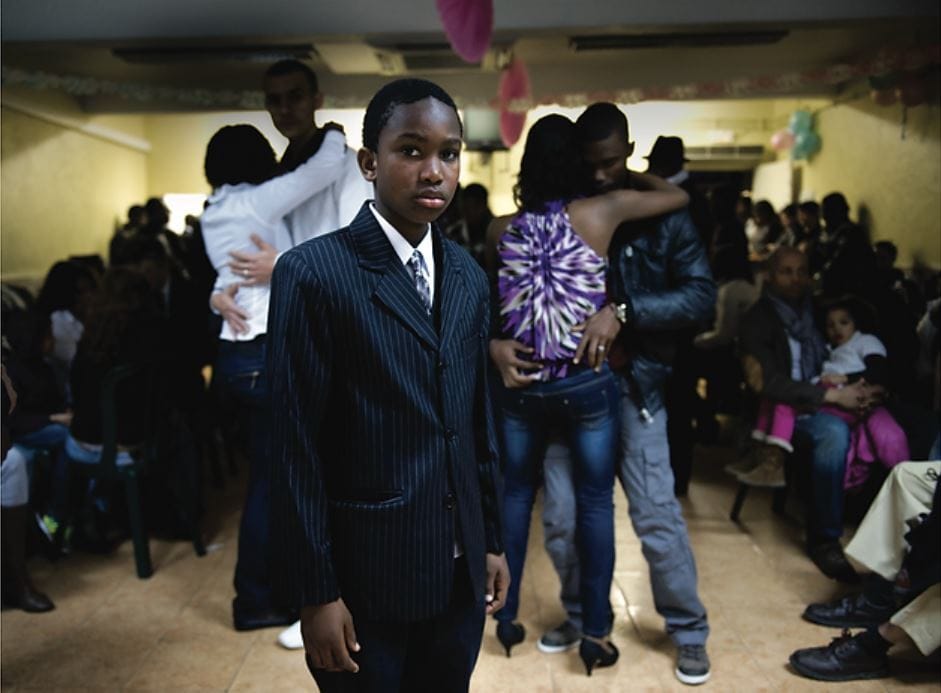 by Augusto Brásio |
Brázio was born in 1964 in Brinches (Serpa) and studied at the Escola Superior de Belas Artes in Lisbon. After a career in photojournalism, he shifted toward long-form, reflective projects. He’s published over ten books and shown work across Portugal and Europe. His projects are often described as personal, yet they carry a collective resonance — quietly reconfiguring the visual archive of the country itself.
“Even when working with state-commissioned images, Brázio finds a way to loosen the official frame. What’s left behind is something more open: a republic of photographs, reordered.”
His images rarely come with captions. As he once said, images should speak for themselves. It’s an ethos that runs through his work and helps explain why his collaboration with Kioskzine felt so natural. Even when working with state-commissioned images, Brázio finds a way to loosen the official frame. What’s left behind is something more open: a republic of photographs, reordered.
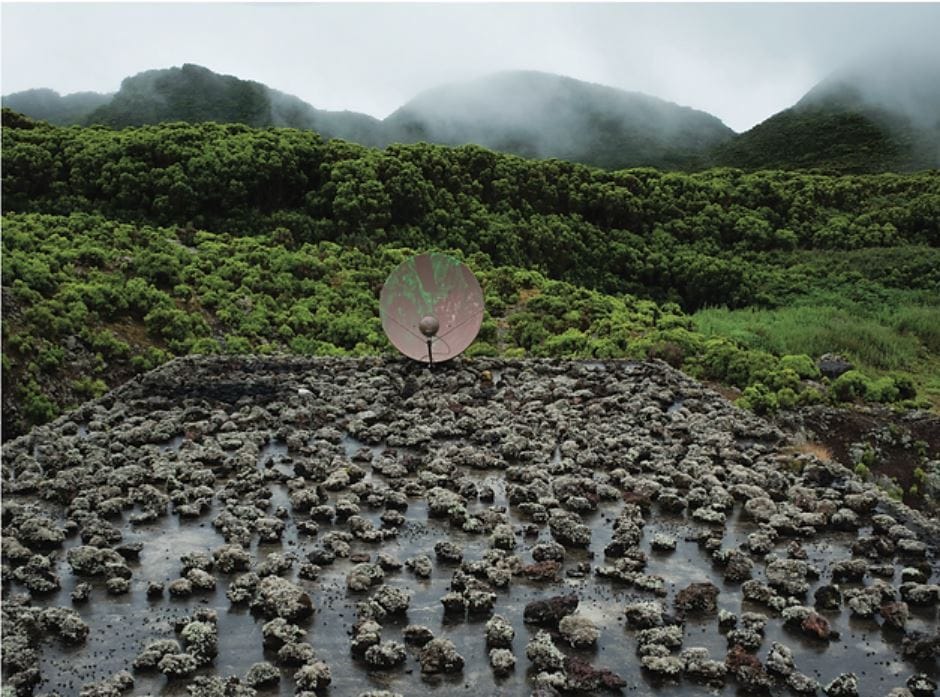
by Augusto Brásio
Kioskzine’s mission to create tactile, lasting documents is vividly present in this edition. As José Farinha put it, “We want these fanzines to sit on your shelf, to be rediscovered years later.” With just 150 copies printed, each issue is both a collector’s object and a vessel for reflection.
Through our editorial partnership, Galeria Local’s newsletter continues to highlight artists like Augusto Brázio and Pauliana Valente Pimentel, inviting a deeper engagement with contemporary documentary practices. We hope this collaboration will extend into future events and exhibitions — opening space for these visual narratives to resonate in print, on the wall, and in conversation.
Narrative Layers
This week’s Narrative Layers brings the second half of a two-part story from the FIRELINES project — my journey through Portugal’s burned interior in October 2020. After a tense and absurd climb through the mountain, I arrived in the village of Adeganha. What followed was an unexpected encounter: an open door, a man named Delfim, a sofa, and a night spent with the soft flicker of RTP Memória. If Part One was about disorientation in nature, Part Two unfolds in the surreal quiet of human hospitality.
THE ROAD TO ADEGANHA
After the climb, I finally reached Adeganha, a village perched atop the Serra do Reboredo. It was around eleven at night. The entire village was built from stone. The streets were empty, the windows dark, not a single car in sight. I had the distinct impression that I’d already been noticed. Parking discreetly to spend the night felt out of the question. Still carrying the pulse of the mountain, my first impulse was to keep going, to find rest in the next town.
 by Jorge Silva In one of the main streets, I saw an open door, a lit room, and a man standing motionless, anchored to a flickering television. I approached, trying to explain myself — what had brought me there, the absurd episode on the mountain. But I must have sounded confused or shaken. He interrupted: “But what do you want now? Where are you going? What, sleep in the car? I have rooms, beds, plenty of space!” I’m not sure what made me accept — but I did. We had dinner, exchanged a few words, and then drove to a café in the next village, Cardanha. There wasn’t one in Adeganha. “The whole village was stone — no lights, no cars, not a soul in sight.” His name was Delfim. When we returned, he offered me the sofa and went upstairs to his room. “The television stays on,” he said as a kind of goodnight. It was his habit, his companion, and he wouldn’t change it just because I was there. |  by Jorge Silva I spent the night with the television — loud, flickering, black-and-white with a faded blue filter. So I spent the night with the television — loud, flickering, black-and-white with a faded blue filter. It was tuned to RTP Memória. The programming included two outdated Portuguese soap operas and a torturously slow documentary about the apparitions at Fátima, the Third Secret, and the role of Russia. Somewhere between fatigue and disbelief, I let go. The surrealism of the entire day — the road, the fear, the bread, the village, the man, the soap operas, Fátima — dissolved into a kind of floating silence. And I fell asleep.  by Jorge Silva |
Arcadia’s Opening – September 2025
Opening at Galeria Local in September 2025, the Arcadia exhibition invites a fresh gaze on urban nature. It challenges viewers to see gardens as living dialogues, where human design meets nature’s persistent voice.
Coming Next:
Davide Degano
Our conversation with the italian photographer Davide Degano will be published in two weeks, as part of Issue 12. It’s a rich, open-ended dialogue that touches on landscape, identity, memory, and the role of photography as a vehicle for historical and personal reckoning.
In the meantime, I invite you to explore Davide’s work directly. His thoughtful, visually layered approach offers plenty to sit with ahead of the upcoming issue:
Premium subscribers will receive early access, as always.

by Davide Degano
“The ordinary is a very under-exploited aspect of our lives because it is so familiar.”
Martin Parr
Until next time,